
China’s BYD, the country’s largest electric-vehicle maker, will no longer be eligible for South Korea’s EV purchase subsidies after failing to secure approval under a new government evaluation system introduced on July 30, marking a setback for its expansion in one of Asia’s most competitive EV markets.
The Ministry of Climate, Energy and Environment said 27 of 35 automakers and importers were selected under the newly introduced Electric Vehicle Distribution Program Operator Evaluation, a screening framework that determines eligibility for government purchase incentives.
Companies that are not selected under the evaluation are excluded from subsidy support.
BYD was the only manufacturer among current passenger EV subsidy recipients in South Korea that was not approved under the program, according to the government’s zero-emission vehicle portal.
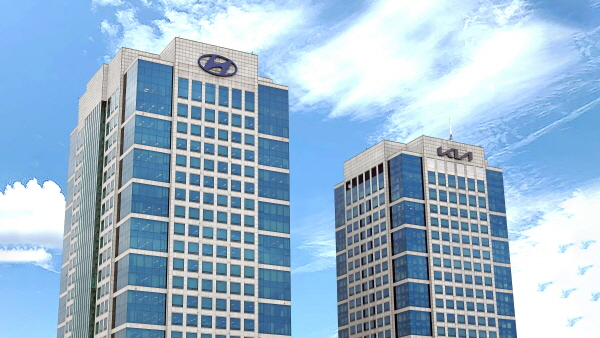
Approved passenger EV manufacturers include Hyundai Motor, Kia, Renault Korea, Mercedes-Benz Korea, Volvo Car Korea, BMW Korea, KG Mobility, Tesla Korea, Volkswagen Group Korea and Polestar Automotive Korea.
The ministry also approved separate sets of manufacturers for electric commercial vehicles, including electric trucks and buses.
Vehicles from manufacturers that were previously eligible for subsidies will still receive incentives if applications were submitted by July 30, even if the manufacturer was not selected under the new evaluation framework.
The screening system was introduced this year to ensure that EV subsidies are directed toward manufacturers that contribute to South Korea’s domestic EV ecosystem through investment, after-sales service capacity and broader industry participation.
When the government released initial criteria in March, foreign automakers criticized the framework as disproportionately favoring domestic manufacturers. Lawmakers also raised concerns that the system could disadvantage overseas brands
In response, the ministry revised the criteria last month, reducing qualitative scoring components and adjusting elements that had been viewed as particularly burdensome for foreign manufacturers.
Despite the revisions, BYD’s exclusion underscores the tightening regulatory environment facing foreign EV makers as South Korea seeks to reshape its domestic EV supply chain.