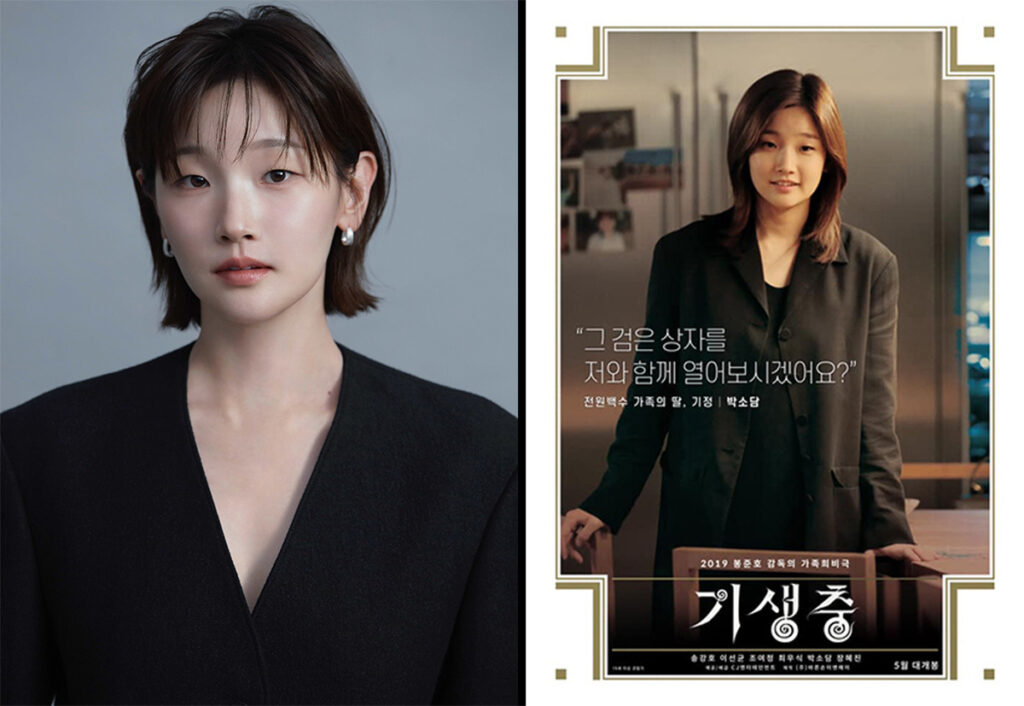
Park So-dam, the South Korean actress who played Kim Ki-jung, also known as “Jessica,” in the Oscar-winning film “Parasite,” revealed that she initially believed she was suffering from burnout before doctors discovered thyroid cancer that had spread to her lymph nodes.
Her experience offers a look at the demands behind South Korea’s rapidly expanding entertainment industry, which has become a major source of globally consumed films and television series. As Korean content continues to gain audiences worldwide, the people creating that content have become part of an international entertainment business, making questions around production conditions and long-term sustainability increasingly relevant.
Park said she began experiencing physical and emotional difficulties while filming the action movie “Phantom.” She struggled to regain her energy, felt depressed and believed she was no longer contributing enough on set. At the time, she thought years of heavy workloads had caused burnout.
During her 20s, Park said she worked on as many as six productions in a single year, including two plays, two television dramas and two films. Her constant presence in the industry earned her a nickname in South Korea’s film community that compared her work pace to that of a civil servant, reflecting how frequently she appeared in new projects.
Medical tests later revealed that her symptoms were caused by a serious health issue. Doctors found 13 nodules in her neck and diagnosed her with papillary thyroid cancer. The cancer had also spread to her lymph nodes.
One of the largest tumors was located near a nerve responsible for controlling higher vocal sounds. Doctors warned Park that if the tumor affected the nerve, she could lose her voice, creating a major threat to an actress whose career depends on vocal performance.
The diagnosis forced Park to immediately undergo surgery and withdraw from promotional activities for “Phantom.” She said she had never undergone general anesthesia before and was afraid because she did not know how long recovery would take. Doctors warned that she could need a feeding tube after the operation and that the recovery process could be unpredictable.
Park said the uncertainty led her to organize belongings at home before entering the hospital because she did not know when she would return.
The surgery stopped the cancer from progressing further, Park said. Because the disease had not spread beyond her lymph nodes, she was able to avoid chemotherapy.
Recovery was still difficult. Park said it took about six months for her voice to fully return. In the early stages, her voice sounded unusually high, and her younger sister helped her with everyday tasks such as washing her hair.
Her physical condition also changed significantly. Park said a walk from her home to Seokchon Lake in Seoul, which normally takes about 15 minutes, became difficult because she quickly became short of breath.
The lake became part of her recovery process. Park said she walked there frequently to rebuild her strength and often cried while walking. Wearing a sun visor helped protect her skin while also allowing her to avoid attention from people who might recognize her.
The experience also changed how Park viewed her life outside acting. After years of focusing almost entirely on her career, she began exploring experiences she had previously postponed, including traveling alone.
Park spent 34 days traveling through Europe by herself, driving as far as Iceland to see the northern lights. She said the trip allowed her to experience life at her own pace, stopping when she wanted and taking time to rest.
For an actress who became internationally recognized through “Parasite,” Park’s experience shows the personal challenges that can exist behind South Korea’s global entertainment success. As Korean films and series continue to attract audiences and investment around the world, the ability to support the people behind that growth is becoming an increasingly important part of the industry’s future.