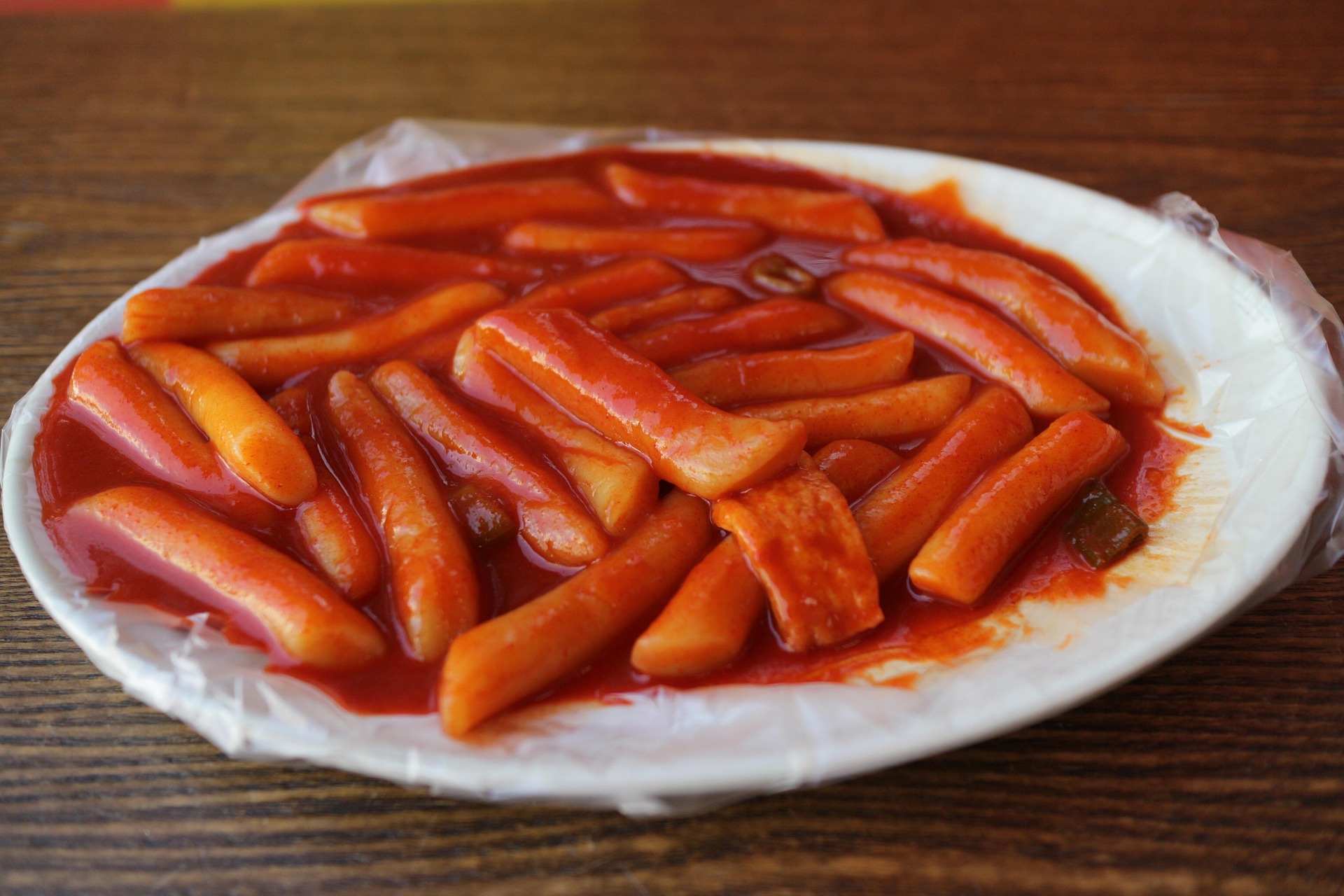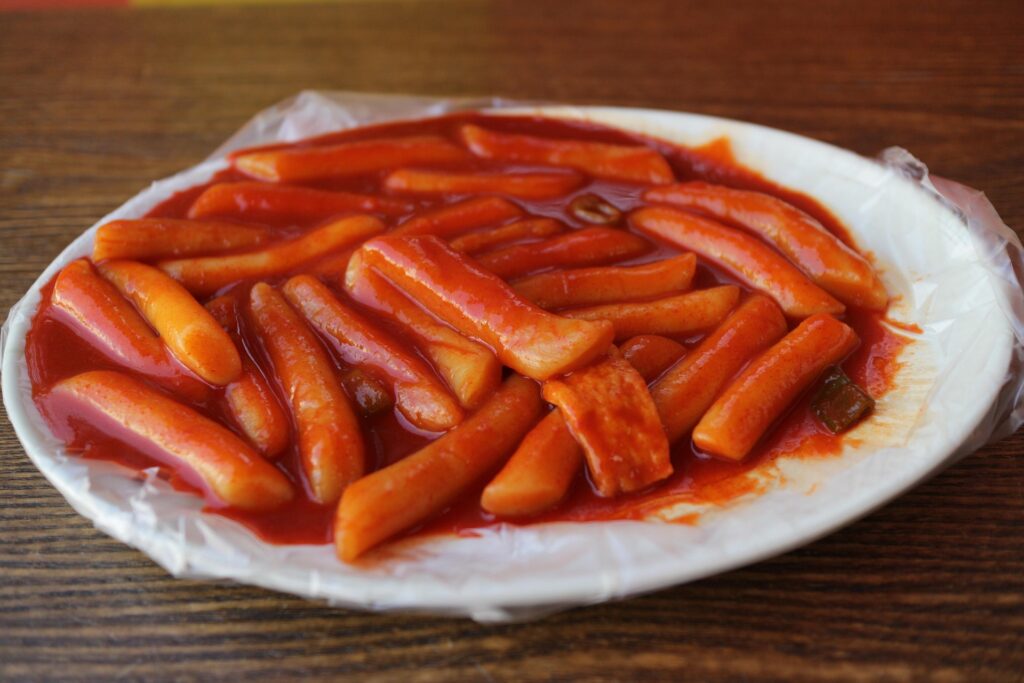
Tteokbokki has long been one of South Korea’s most familiar street foods and has become better known overseas as Korean food has reached a wider audience. But the chewy rice cakes at the center of the dish are produced under a rule that may look unusual from outside Korea. The government restricts how far large corporations can enter or expand in the business.
South Korea said Friday that it will keep those restrictions in place for another 5 years, extending protection for manufacturers of rice cakes used in tteokbokki and tteokguk through Sept. 15, 2031.
The government is not regulating the rice cakes because the food itself presents a special safety or supply problem. The restrictions are about who gets to compete in the market.
South Korea classifies some industries as businesses that provide a livelihood for large numbers of small operators. In those sectors, the government can limit expansion by large corporations when it determines that smaller businesses need protection from competitors with far greater capital, production capacity and distribution power.
That policy is rooted in a 2018 special law intended to protect the livelihoods and business stability of small merchants and manufacturers. Once an industry is designated under the system, large companies are generally restricted for 5 years from acquiring businesses, entering the market or substantially expanding existing operations.
Rice cakes used for tteokbokki and tteokguk were added to the system in 2021.
The designation reflects the way South Korea treats some small business sectors. Rather than viewing every market only through the principle of unrestricted competition, the government can treat certain industries as an economic base for small operators whose businesses could be displaced if much larger companies rapidly expanded into the same market.
That is why an everyday ingredient such as rice cake can become the subject of industrial regulation.
The original protection for tteokbokki and tteokguk rice cake manufacturers was scheduled to expire this September. The government committee reviewing the industry instead decided that another 5 years of protection were warranted.
The committee considered the relatively small scale of businesses in the sector and the continued need to protect their livelihoods. It also reviewed how the existing designation had affected both small producers and the growth of the market, as well as its potential impact on industry competitiveness and consumers.
The Ministry of SMEs and Startups, the South Korean government agency responsible for policies involving small and midsize businesses, said the renewed designation will take effect Sept. 16.
But Seoul is not simply keeping the old restrictions unchanged.
As the market has grown, the government decided to give large companies already operating in the sector more room to expand. Their permitted annual shipments will rise to 120% of the highest annual volume recorded during the past 10 years. The current rule allows 110% of the highest annual volume recorded during the previous 5 years.
The change illustrates the balance behind the policy. South Korea wants to prevent large corporations from overwhelming smaller rice cake manufacturers, but it also does not want the protection system to prevent the industry itself from expanding.
The same distinction can be seen in the exceptions to the rule.
Rice cakes produced for export can be shipped without the same limits. Large companies can also receive approval for unrestricted shipments when they manufacture products for small and midsize businesses under OEM arrangements or when the products are made with rice or wheat grown in South Korea.
That is particularly relevant to tteokbokki as Korean food becomes more familiar outside the country. The government is not trying to restrict the overseas expansion of the food or prevent companies from supplying foreign demand. Its intervention is focused on competition inside the Korean manufacturing market.
The result is a system in which the same rice cake can be treated differently depending on where and why it is produced. Production aimed at foreign markets can expand without the domestic ceiling, while growth at home remains subject to rules intended to preserve room for smaller manufacturers.
South Korea’s latest decision therefore says as much about its approach to small business as it does about rice cakes.
The government has decided that, in selected industries, allowing large corporations and small operators to compete without restriction is not always the preferred outcome. For another 5 years, the manufacturers supplying the rice cakes behind tteokbokki and tteokguk will remain one of the industries where Seoul has chosen to protect the smaller players while allowing the market itself to keep growing.