A new snapshot of employment across the nation’s corporate elite shows a labor market increasingly split between globally competitive technology and consumer franchises that are still hiring, and legacy manufacturers and retailers that are retrenching under margin pressure.
Total employment at major firms fell by more than 6,700 positions in 2025, according to data compiled by corporate research firm CEO Score. The group analyzed 476 of the country’s 500 largest companies by revenue, excluding businesses undergoing mergers or major structural changes, and based its tally on national pension registrations.
As of December, those companies employed about 1.63 million people, down from 1.64 million a year earlier, a decline of 0.4%.
On paper, hiring and firing were nearly balanced. Some 222 companies, or 46.6% of those surveyed, increased headcount. Yet almost three-quarters of that group added fewer than 100 workers, suggesting many executives remain reluctant to make big, long-term labor bets. Meanwhile, 249 companies, or 52.3%, reduced staff.
The biggest winners were tied to two of South Korea’s strongest export narratives: beauty and semiconductors.
CJ Olive Young, the country’s dominant health-and-beauty chain, posted the largest net increase, adding 2,518 employees, up 21.1% from a year earlier. The retailer has ridden the global boom in K-beauty, expanding its private-label offerings and opening stores at a rapid clip to capture tourist and overseas demand.
SK Hynix, the world’s No. 2 memory-chip maker, wasn’t far behind. The company added 2,188 workers, a 6.9% increase, as it ramped up research, development and advanced manufacturing capacity to meet recovering demand for high-end chips used in artificial intelligence servers and data centers.
Several others also expanded payrolls by more than 1,000. Korea Railroad Corp. added 1,942 employees, Samgu INC increased staff by 1,266, and U.S.-listed e-commerce company Coupang hired 1,096 more workers. Fintech upstart Viva Republica, operator of the Toss payments app, nearly doubled its workforce, adding 929 employees for an 87.1% surge.
Elsewhere, the picture was far less upbeat.
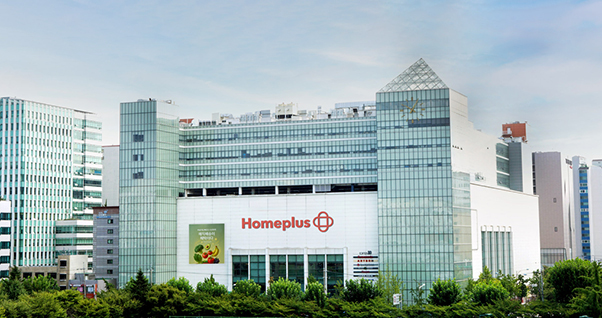
Large, familiar names in electronics, big-box retail and autos trimmed payrolls as they grappled with slower domestic consumption, intensifying competition and ongoing restructuring. LG Electronics cut 1,687 jobs, a 4.7% decline. E-Mart and Homeplus each shed more than 1,300 positions. LG Display, Lotte Shopping and Hyundai Motor all reported reductions exceeding 1,000 employees.
At the level of the sprawling family-controlled conglomerates known as chaebol, only a handful managed overall job growth. SK Group, Hanwha and Hanjin expanded. The rest shrank, led by LG Group, which reduced its workforce by more than 5,300, and Lotte Group, which cut over 3,600.
For American investors and executives, the diverging numbers offer a window into how Asia’s fourth-largest economy is adjusting to a world shaped by artificial intelligence, selective consumer crazes and stubbornly weak traditional demand.
Companies plugged into global supply chains for chips or benefiting from the cultural pull of Korean brands are still willing to hire. Those dependent on the domestic cycle—or older export models—are choosing caution, automation and balance-sheet repair instead.
The result is a corporate recovery that, much like in the U.S. and Europe, is real but uneven, producing growth in some corners while leaving others to slim down.