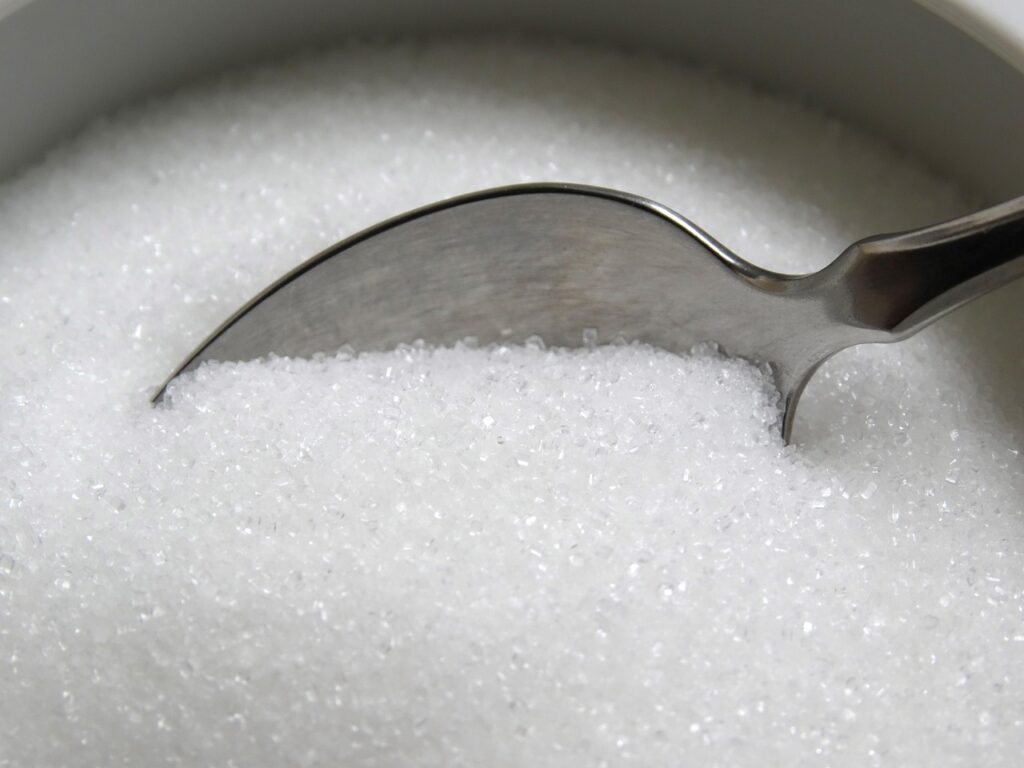
President Lee Jae-myung has reopened a national policy discussion in South Korea by raising the possibility of imposing a levy on sugar, a move that could expand the scope of the country’s existing health-promotion charges beyond tobacco.
President Lee introduced the idea in a post on social media after sharing a newspaper report indicating strong public support for imposing charges on companies that excessively use added sugar. In the post, he suggested that sugar consumption could be curbed through a levy similar to those applied to cigarettes, with the revenue reinvested in regional and public healthcare, and asked for public opinion.
The report cited by the president was based on a survey conducted earlier this month by Seoul National University’s Health Culture Project Group of 1,030 adults. According to the survey, 80.1% of respondents said they supported imposing charges on companies that overuse added sugar.
South Korea already operates a national health-promotion levy system for tobacco products. Cigarette packs are charged about 50 cents per 20 cigarettes, while liquid nicotine used in e-cigarettes is subject to a levy of roughly 30 cents per 1oz. Revenue from those charges is used to fund anti-smoking education, public campaigns, prevention programs and support for people affected by smoking-related illnesses. President Lee’s comments suggested applying a similar funding mechanism to sugar.
The approach mirrors policy tools used in several advanced economies, including parts of the U.S., where levies on sugar or sweetened beverages have been introduced as public-health measures.
Kim Yong-beom, the presidential chief of policy, said the administration has been reviewing the issue for about two months and emphasized that no decision has been made. He said the matter requires broad social discussion.
The idea has been raised in the National Assembly before. In 2021, lawmakers proposed legislation to impose health-promotion charges on sugar-added beverages, but the bill was discarded when the parliamentary session ended. In the current assembly, Rep. Jung Tae-ho, a ruling-party lawmaker serving on the planning and finance committee, is preparing legislation related to a sugar levy.
Rep. Jung said public acceptance remains a key issue because of the close link to taxation, adding that the policy should be considered from a public-health perspective. He also said he personally believes a tax-based approach may be more appropriate than a levy. A public forum involving academic institutions and former senior officials is scheduled for next month, after which lawmakers plan to move forward with legislative work.
Opposition politicians have criticized the proposal, warning that higher product prices could burden consumers and small businesses. A spokesperson for the People Power Party said the idea amounted to government intervention in household consumption.
President Lee later rejected claims that he was advocating a tax increase, saying his remarks had been mischaracterized. In a follow-up post, he said he had asked for public opinion and objected to the proposal being labeled a “sugar tax,” calling for discussion based on accurate descriptions of the idea.