A recent theft of high-end graphics processing units (GPUs) in South Korea is highlighting a growing side effect of elevated semiconductor prices: an increase in component-driven property crime.
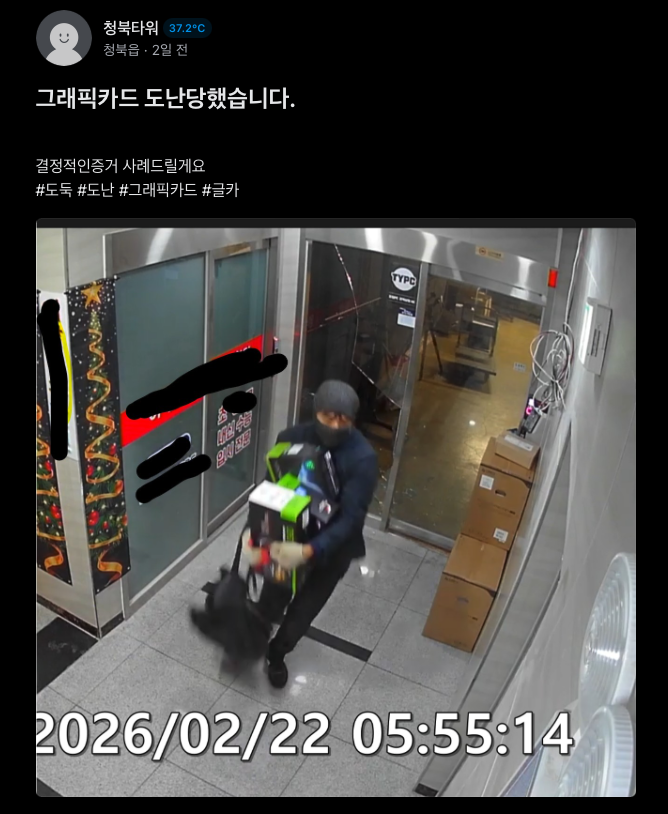
Police in Pyeongtaek said they arrested a man in his 40s on Feb. 23 on charges of aggravated theft after he allegedly stole about 20 million won (about $13,800) worth of GPUs from a computer-parts retailer. Authorities said the suspect used a hammer drill to breach the store before dawn, quickly removing three boxes of GPUs and fleeing the scene.
He was apprehended roughly a day later at a motel in Jincheon. By the time of his arrest, two of the three stolen boxes had already been resold, according to investigators, who are tracing the distribution channels of the stolen goods.
The case underscores how sustained demand for artificial-intelligence hardware is reshaping not only supply chains but also criminal incentives. GPUs—now essential for AI model training and data-center expansion—have become higher-value, more liquid assets, increasing their appeal as theft targets.
Industry analysts describe the environment as one of “chipflation,” with prices for GPUs and memory chips remaining elevated amid strong demand and limited supply. Law-enforcement officials say the growing resale market for such components is making it easier for stolen goods to be quickly converted into cash.
Authorities note that similar dynamics have surfaced before. During the 2022 cryptocurrency boom, when demand for Bitcoin contributed to graphics-card shortages, isolated GPU theft incidents were also reported.
In a case dating back to 2022, a court in Seoul Eastern District Court sentenced a 27-year-old man to three years in prison for stealing dozens of GPUs from motel rooms across Seoul. Prosecutors said the defendant dismantled desktop computers in multiple locations, including Songpa District, taking 64 graphics cards worth a combined 69.1 million won (about $47,700).
While such cases remain relatively small in scale, they point to a shifting risk landscape. As semiconductor prices stay elevated, authorities and retailers may face growing pressure to secure not only supply chains but also the physical components increasingly central to the digital economy.