South Korea is intensifying its fight against ticket scalping, with the government framing the crackdown as a necessary intervention to protect the cultural sector from what officials describe as a decades-long “chronic disease.”
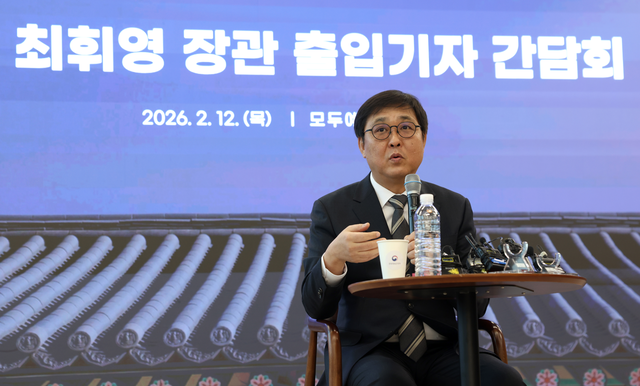
Choi Hwi-young, Minister of Culture, Sports and Tourism, said at a Feb. 12 press briefing in Seoul that his office moved quickly after taking office in July 2025 to overhaul the approach to illegal ticket resales. “We could no longer leave scalping unchecked,” Choi said, noting that amendments to key legislation were finalized within roughly four months.
Last month, the National Assembly passed revisions to the Performance Act and the National Sports Promotion Act. The changes prohibit the purchase of tickets for resale through improper means—regardless of whether automated “macro” software is used—and ban habitual or commercial resales above face value.
Choi acknowledged that enforcement will take time but said the ministry plans public outreach before implementation to ensure that both consumers and event organizers understand the new rules.
The minister also addressed leadership vacancies at several public institutions and performing arts organizations under the ministry’s oversight. “I feel a sense of urgency,” Choi said, adding that identifying qualified candidates had been a priority and that appointments are now moving forward across multiple agencies.
On cultural heritage matters, Choi rejected criticism that the government applies inconsistent preservation standards. In discussing redevelopment near Jongmyo Shrine and a proposed Korean-language signboard at Gwanghwamun, he said the cases differ in scope. Projects that preserve the original structure while reflecting contemporary needs can be treated differently from those that could alter the historical form, which require stricter evaluation.
Looking ahead, Choi highlighted the upcoming return of BTS to Seoul’s Gwanghwamun Square as a symbolic moment, pledging full government support. He also noted that BLACKPINK is preparing a collaboration with the National Museum of Korea, signaling broader partnerships between K-pop acts and state cultural institutions.
Choi cited the creation of a presidential-level Popular Culture Exchange Committee as another milestone, emphasizing that the framework will help strengthen K-culture’s global foundation. “We are reexamining all policies and approaches,” he said, signaling a broader strategy to protect the integrity of South Korea’s cultural industry while cracking down on scalping.