A glossy, high-concept advertisement for South Korea’s iconic Shin Ramyun instant noodles has racked up more than 130 million views on YouTube in its first month, a viral reception that underscores how the country’s pop culture machinery is reshaping global marketing, turning even packaged food into a form of entertainment.
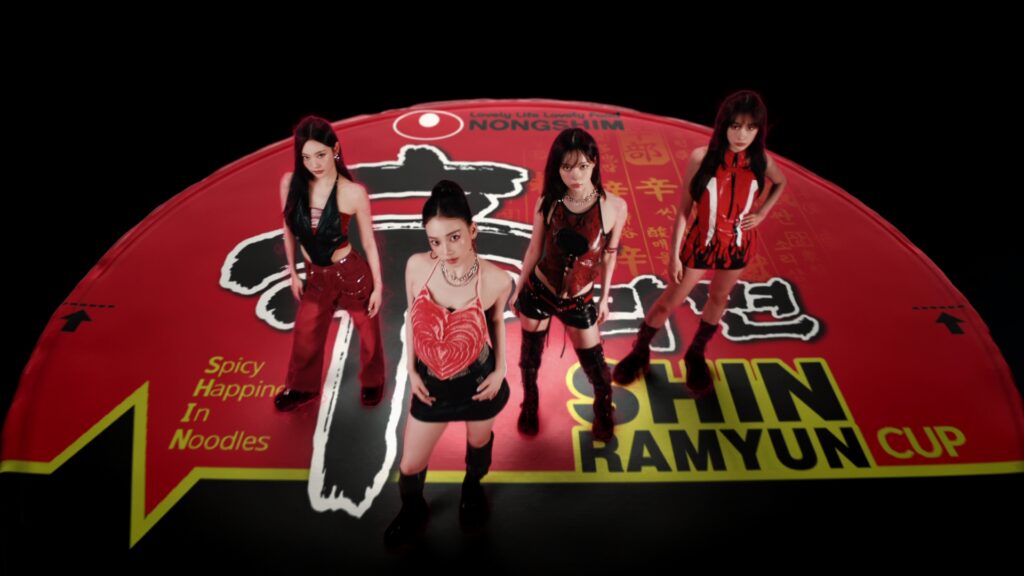
The campaign, launched in November by food giant Nongshim, stars the K-pop group aespa and is styled as a sleek music video rather than a conventional product spot. Its rapid online traction highlights a strategic shift by Korean consumer brands: leveraging the worldwide appeal of Korean entertainment to create cultural narratives that transcend traditional advertising.
“We are no longer just selling noodles; we are offering an experience that connects with the global language of K-pop,” said a Nongshim official. The ad features the four-member group performing a choreographed routine that playfully mimics opening a ramen package and adding hot water—a sequence fans have dubbed the “Shin Ramyun dance.” Set to a remake of the pop song “Spice Up Your Life,” the video has generated millions of likes and comments, with many viewers noting it feels more like a music release than a commercial.
The campaign arrives as Korean culture has moved firmly into the American mainstream. Korean dramas and films consistently rank high on U.S. streaming platforms, K-pop acts regularly chart alongside Western artists, and subtitles are no longer a barrier for young audiences. In this environment, products like Shin Ramyun—once a niche item in Asian grocery stores—have become pantry staples in American households, requiring less explanation and benefiting from broader cultural familiarity.
Shin Ramyun, known for its spicy broth and chewy texture, has long been one of Korea’s most successful food exports, widely available in U.S. supermarkets and club stores. But Nongshim’s latest effort marks a deliberate pivot from functional marketing to cultural storytelling. By partnering with aespa—a group with a strong North American and European fan base—the brand accesses a ready-made global audience that engages deeply with content from their favorite idols.
The commercial’s success has been accompanied by the rollout of limited-edition Shin Ramyun packaging featuring aespa’s branding, first in China and expanding to South Korea, Australia, and other markets. The tactic mirrors American brand strategies around collectible packaging and celebrity collaboration but is turbocharged by the intense loyalty and social media engagement of K-pop fandoms.
Industry analysts say the campaign reflects a broader evolution in how Korean companies are capitalizing on the country’s cultural soft power. “Entertainment has done the heavy lifting of making Korean culture cool and accessible worldwide,” said Park Eun-kyung, a consumer trends analyst in Seoul. “Now, brands like Nongshim can step in not as foreign products, but as natural extensions of that cultural wave.”
For U.S. marketers, the approach offers a case study in how to cut through a cluttered media landscape. With consumer attention increasingly fragmented, aligning with pop culture figures who already command global followings allows brands to bypass traditional advertising channels and embed themselves into the daily content consumption of younger demographics.
Nongshim reports that the campaign is already the most-viewed advertisement in Shin Ramyun’s history. Beyond immediate metrics, it reinforces how the lines between entertainment, culture, and commerce continue to blur—and how a spicy bowl of noodles can become a symbol of Korea’s growing influence on global lifestyles.