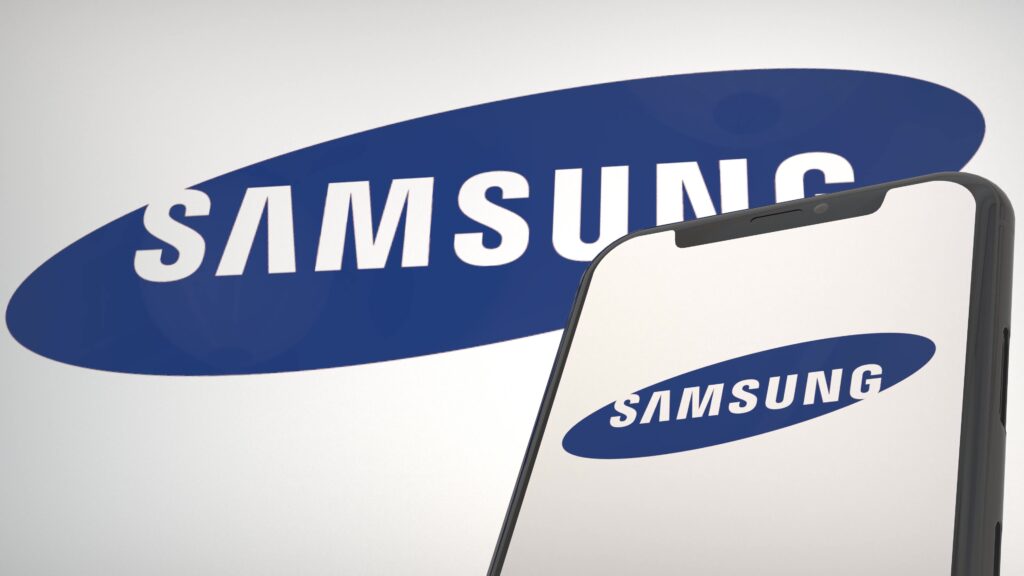
Samsung Electronics reported record quarterly results, driven by a surge in memory-chip demand tied to artificial-intelligence investment and supported by favorable currency movements.
The company said April 7 it posted revenue of about $98 billion and operating profit of $42 billion for the first quarter, marking the highest quarterly performance in its history. The figure nearly matches its previous full-year record operating profit of about $43 billion set in 2018.
Momentum is expected to continue, with analysts forecasting another record quarter in the second quarter.
Much of the earnings growth was driven by Samsung’s semiconductor division, which is estimated to have generated roughly $37 billion in operating profit. Within that, DRAM alone is believed to have contributed more than $30 billion.
The surge reflects strong demand for memory chips as global investment in AI infrastructure accelerates. As workloads shift from training to inference, demand for higher memory capacity has intensified, supporting sustained price increases across both DRAM and NAND products.
High-bandwidth memory, or HBM, has emerged as a key growth driver. Samsung began mass production of next-generation HBM4 earlier this year and unveiled its follow-up HBM4E at Nvidia’s annual developer conference, GTC 2026, as it works to strengthen its position in the AI memory market.
A weaker Korean won against the U.S. dollar also contributed to earnings growth by boosting export revenues.
According to market research firm TrendForce, DRAM prices rose 90% to 95% in the first quarter from the previous quarter and are expected to increase by about 60% in the second quarter. On an annual basis, DRAM prices could rise as much as 250%.
Earlier concerns that memory demand might weaken in the second half have largely faded, as AI-related investment continues to expand rapidly. Analysts estimate that global AI infrastructure spending could exceed $740 billion annually, structurally supporting demand for memory.
KB Securities said AI data-center operators are now absorbing about 60% of Samsung’s DRAM and NAND shipments, underscoring the scale of demand.
Reflecting the improved outlook, forecasts for Samsung’s annual operating profit have been revised sharply higher, from around $150 billion to more than $220 billion. Some analysts expect quarterly operating profit could reach as high as $73 billion by the fourth quarter.
Samsung’s performance places it among the top five global technology companies by quarterly operating profit. Recent results show Apple reporting $50.9 billion, Nvidia $44.3 billion, Microsoft $38.3 billion, Samsung about $38 billion, and Alphabet $35.9 billion.
Some analysts say Samsung could surpass Nvidia as the world’s most profitable company as early as next year, depending on the trajectory of the AI-driven memory cycle.
KB Securities estimates Samsung’s operating profit at about $240 billion this year and $360 billion in 2027, narrowing the gap with Nvidia, which is projected to post around $260 billion this year. Despite the strong earnings outlook, Samsung’s market valuation remains well below that of its global peers, suggesting potential upside for investors.