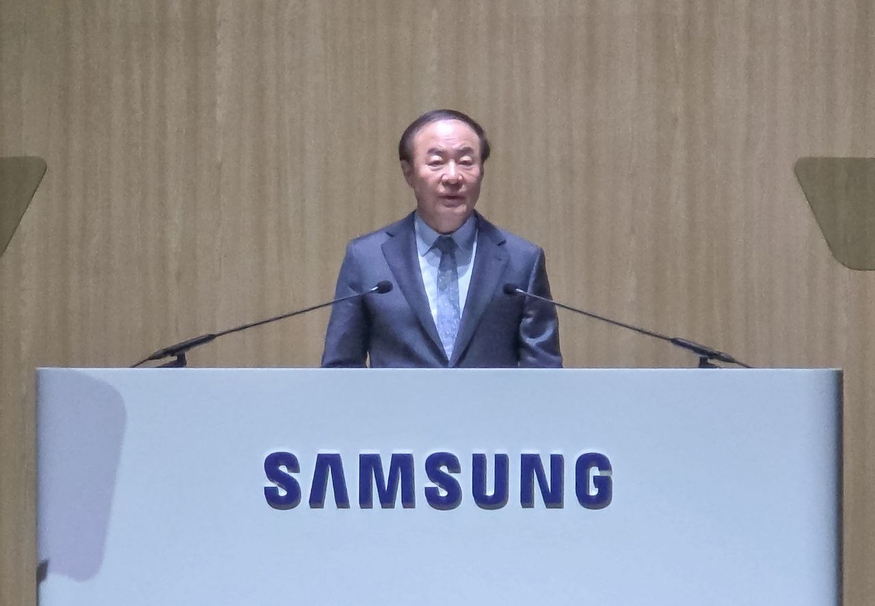
Samsung Electronics has become the first South Korean company to surpass a market capitalization of $770 billion, driven by a powerful rebound in the global semiconductor cycle and renewed confidence in its high-bandwidth memory business.
Shares closed at $130 on 02/04 (local time), up nearly 1%, after reversing early losses and hitting an intraday record high. The rally lifted Samsung’s market value to about $773 billion intraday, with the closing figure settling near $770 billion, according to Korea Exchange data.
Samsung now accounts for roughly 22.6% of the total value of South Korea’s Kospi index, underscoring its outsized role in the domestic stock market.
The milestone comes just over three months after the company crossed the $460 billion threshold, reflecting accelerating gains fueled by surging demand for memory chips tied to global artificial-intelligence infrastructure spending.
Investors have focused on Samsung’s improving competitiveness in high-bandwidth memory (HBM), a critical component for AI accelerators. After lagging rivals, the company is expected to regain market share as it advances toward next-generation HBM4 products.
The upcycle has already translated into record earnings. Samsung reported fourth-quarter operating profit of about $15 billion, more than three times higher than a year earlier and the highest quarterly figure ever posted by a South Korean company. Quarterly revenue rose to approximately $69 billion, also a record.
For the full year, Samsung generated roughly $246 billion in revenue and $32 billion in operating profit, marking its highest annual sales and its fourth-highest operating profit on record. The semiconductor division led the results, supported by rising memory prices and growing sales of premium products such as DDR5 server chips and enterprise solid-state drives.
Global banks remain bullish. JPMorgan recently raised its base-case target range for the Kospi index to 6,000–7,500, citing Samsung Electronics and other semiconductor stocks as the primary drivers. The bank said Samsung’s share price could rise another 45% to 50% as contract chip prices continue to lag spot-market levels.
Morgan Stanley also argued that the industry has entered an “unprecedented supply-constrained phase,” adding that traditional valuation metrics fail to reflect the sector’s structural profit shift.
Samsung’s shareholder-return policy has further supported the stock. In late January, the company announced a $1 billion special dividend, its first in five years, as total dividends last year reached about $8.3 billion.
Analysts say the combination of a semiconductor supercycle, improving HBM competitiveness and stepped-up shareholder returns has reshaped expectations for Samsung’s long-term earnings power.