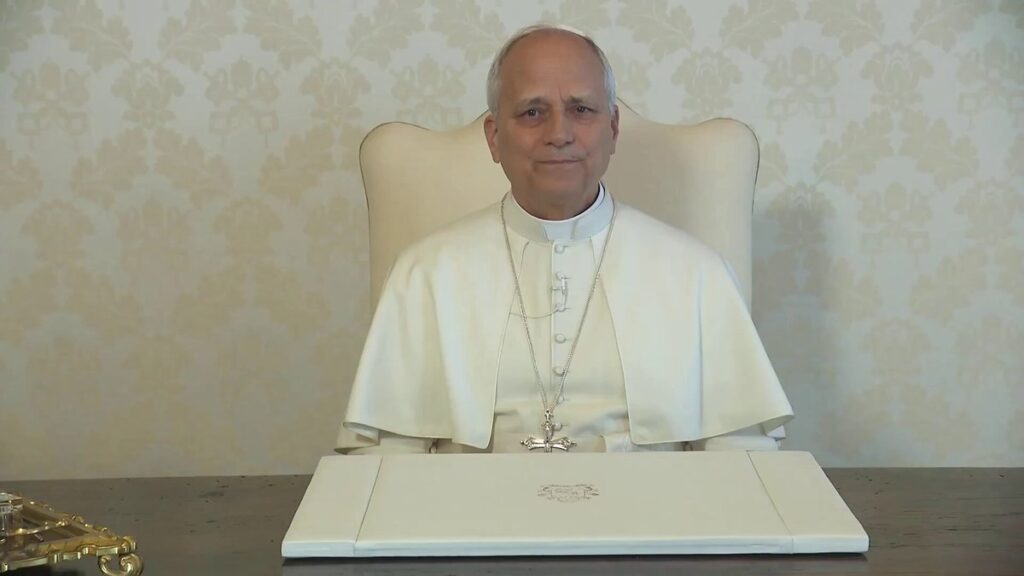
Pope Leo XIV does not often single out individual businesses. When he does, it is usually to make a broader point about the role of economic actors in society. That was the case this week, when the pope sent a signed message to Sungsimdang, a bakery in the South Korean city of Daejeon, praising its 70-year history of combining commercial growth with sustained service to the poor.
The message was delivered in late December by You Heung-sik, prefect of the Vatican’s Dicastery for the Clergy, during a visit to South Korea, according to the bakery. In it, the pope described Sungsimdang as an example of an “economy for all,” commending its efforts to promote fraternity and solidarity through concrete social and economic contributions, particularly on behalf of the most vulnerable members of the community.
Sungsimdang was founded in 1956 as a small outdoor steamed-bun stand near Daejeon Station, in the aftermath of the Korean War. Over the decades, it grew alongside South Korea’s rapid economic transformation, eventually becoming one of the country’s most recognizable local brands. Yet its public reputation has rested not only on its commercial success but also on a long-standing practice of donating bread to people in need, a routine commitment that has continued for generations.
That record has drawn repeated attention from the Vatican. In 2015, the bakery’s chief executive, Lim Young-jin, received the Pontifical Order of St. Gregory the Great, one of the highest honors bestowed on lay Catholics. Four years later, his wife, Kim Mi-jin, an executive director at the company, was awarded the Cross Pro Ecclesia et Pontifice for service to the Church and the pope. During Pope Francis’s visit to South Korea in 2014, Sungsimdang was chosen to provide bread for the pontiff, a gesture that reflected its standing within the Catholic community.
The pope’s latest message places that history in a wider context. Rather than focusing on charity as a one-time act, the letter framed Sungsimdang’s work as a sustained economic model, one in which a locally rooted business integrates social responsibility into its core operations. In an era when debates over inequality and corporate responsibility are often dominated by multinational companies and government policy, the bakery’s example points to a quieter, incremental approach built over decades.
Cardinal You, who delivered the message, has deep ties to Daejeon, having served there for much of his clerical career before taking up his post in Rome. His role underscored that the pope’s praise was not a symbolic gesture tied only to an anniversary, but the culmination of long-observed practice.
By marking Sungsimdang’s 70th year, the pope highlighted a broader idea: that ethical economic behavior does not emerge solely from large institutions or sweeping reforms. It can also take shape within local businesses, sustained by consistency and community trust, and over time resonate far beyond the place where it began.