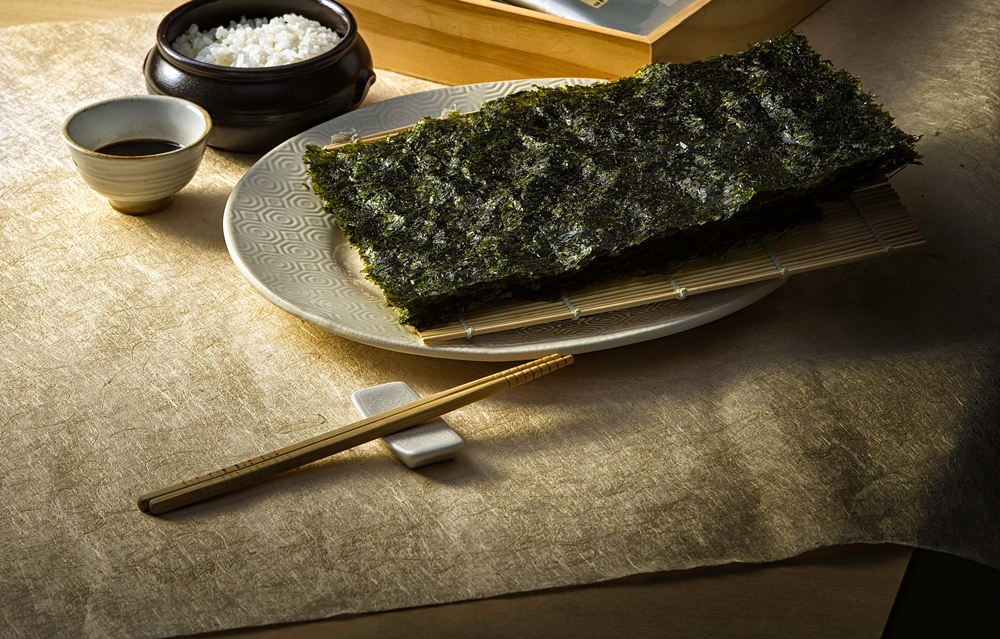
South Korea’s signature seaweed snack, known globally as “K-Gim,” is poised to hit a historic milestone this year, with exports on pace to surpass $1 billion for the first time — fueled by the global K-food boom and rising demand for Korean cuisine.
According to data released on November 3 by the Korea Agro-Fisheries & Food Trade Corporation (aT), Korea’s seaweed exports reached $882.3 million through the third quarter of 2025, up 14% from the same period last year ($773.7 million). This represents a nearly fourfold increase compared to 2015, when exports totaled just $222 million.
Japan remained the largest market with $189.7 million in imports, followed by the United States ($183.2 million), China ($89.2 million), and Thailand ($82.9 million). Exports to China surged 41.4% year-over-year, while shipments to Japan and the U.S. rose 18.4% and 14.2%, respectively.
A Ministry of Oceans and Fisheries official said that the growing global popularity of Korean culture — including K-pop and K-dramas — has fueled interest in Korean dishes such as gimbap and other foods made with gim (seaweed).
“Driven by the K-food trend, seaweed exports have steadily increased, and we expect to comfortably surpass the $1 billion mark this year,” the official said.
Last year, Korea’s seaweed exports totaled $997 million, narrowly missing the symbolic $1 billion threshold. The ministry had initially targeted 2027 for achieving that milestone but now expects to reach it ahead of schedule.
Beyond boosting export volume, South Korea is also working to brand and standardize “K-Gim” internationally — similar to how “Hanwoo” beef and “Han-don” pork have been positioned as premium Korean products. Currently, Korean seaweed is often marketed under Japanese or generic terms such as nori or seaweed. Seoul hopes to establish “GIM” as the official global name through the Codex Alimentarius Commission, a joint body of the UN Food and Agriculture Organization (FAO) and the World Health Organization (WHO).
The ministry submitted its proposal for international standardization to Codex in August, following the plan’s announcement last year. The proposal passed the Asian regional committee in September and is now awaiting final review this month.
If approved, South Korea will spend the next six to seven years verifying the safety, composition, and labeling standards of its seaweed products. Officials say the initiative could open the door to stricter markets such as Europe, where food safety regulations are more rigorous.
“Once Korean gim becomes an international standard, it will strengthen our global competitiveness and help expand exports to premium markets,” the ministry spokesperson added.