As U.S. food manufacturers pour money into automation and energy efficiency to protect margins, a frozen pizza plant in Salina, Kansas, has emerged as an example of how those pressures are reshaping where—and how—food is made. The facility was recently named Plant of the Year by a U.S. industry publication, but its significance extends beyond the award itself.
The plant is operated by CJ Schwan’s, a U.S. frozen-food producer owned by CJ CheilJedang, part of CJ Group, one of South Korea’s largest consumer-focused conglomerates. Long known at home for packaged foods and logistics, CJ has spent the past decade shifting its growth strategy toward building production capacity inside major overseas markets rather than shipping products from Asia.
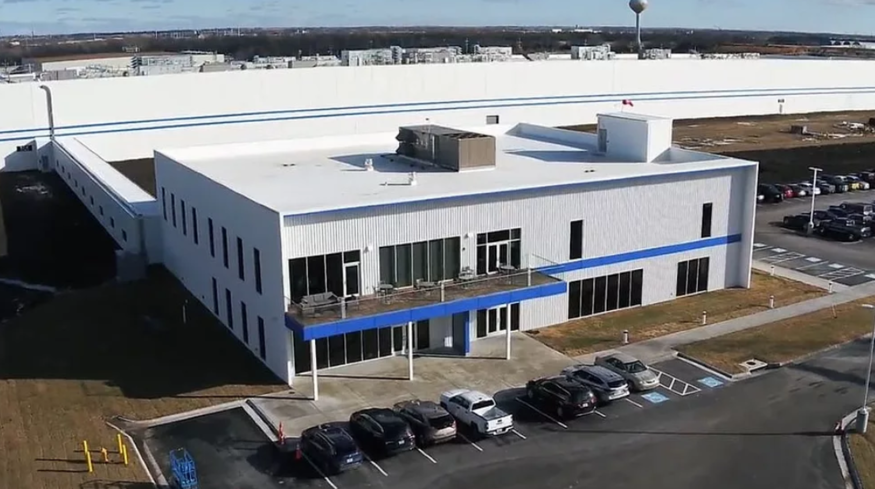
The Salina complex illustrates how that strategy is playing out on American soil. Covering more than one million square feet, the campus produces over 100 million frozen pizzas a year for brands including Red Baron, Tony’s, Freschetta and Big Daddy—products aimed squarely at mainstream U.S. grocery shoppers. A multiyear expansion added a new production facility and a fully automated logistics center, allowing manufacturing and distribution to function as a single, tightly coordinated system.
The design reflects the economic realities facing the frozen food industry. Labor shortages and rising wages have pushed manufacturers toward automation, while volatile energy costs have increased the appeal of long-term power contracts. At Salina, production and outbound logistics are synchronized through an integrated control system, reducing manual handling and smoothing throughput. Electricity is sourced under a long-term agreement tied to a local wind farm, providing cost predictability in a business where margins are thin.
Food Engineering, which selected the site as its 2026 Plant of the Year, described the facility as a “factory of the future,” citing the way manufacturing, storage and distribution were designed together rather than added piecemeal over time. That approach has become increasingly attractive as food companies look to limit operational risk while scaling output.
What makes the Salina project notable is not only its technology, but who chose to build it. Korean food companies that once treated the U.S. primarily as an export destination are now committing capital to domestic manufacturing assets that operate under the same cost pressures and competitive dynamics as American rivals. In frozen foods, where supply disruptions can quickly lead to lost shelf space, proximity to consumers has become a strategic necessity.
CJ’s investment positions the Salina plant as a core U.S. industrial asset rather than an overseas extension. Built to compete on volume, efficiency and reliability, the facility reflects a broader recalibration by Korean consumer-goods groups that see long-term growth in the U.S. tied less to shipping finished products across borders and more to embedding themselves in the American manufacturing base.
As automation and energy management increasingly define success in food production, the Kansas plant offers a clear signal of how foreign-owned companies are adapting to—and helping shape—the next phase of U.S. manufacturing.