In the aisles of Costco, where bulk paper goods and family-sized frozen meals dominate, a quieter shift has been taking place.
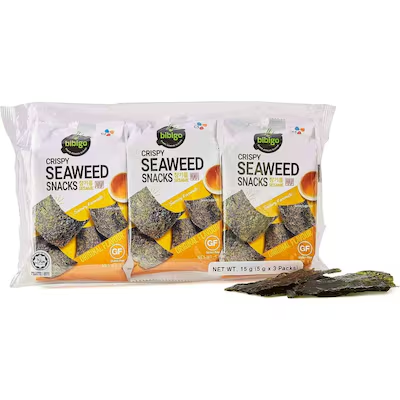
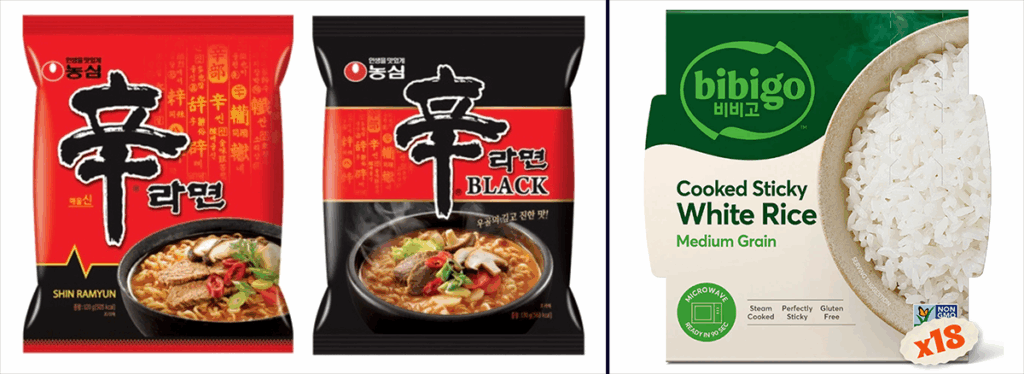
Two Korean products — Bibigo’s instant white rice, made by CJ CheilJedang, a South Korean food and consumer-goods company, and Shin Ramyun, produced by Nongshim, the country’s largest noodle manufacturer — have recently been singled out as standout discount items, not as curiosities from abroad, but as practical additions to the American pantry.
Both products were included in a shopper-selected list of top Costco deals tied to New Year promotions. Sold in large multipacks at aggressively low prices, they were positioned alongside everyday essentials.
A 12-pack of microwave-ready rice priced below $10 and an 18-pack of ramen noodles selling for about $12 placed them firmly within reach of routine, repeat purchases.
The success of Bibigo’s instant rice reflects how American eating habits have evolved. The product requires no cooking beyond a few minutes in a microwave and carries little cultural specificity in how it is used.
For many shoppers, it functions as a neutral base, interchangeable with bread or pasta, adaptable to a wide range of meals rather than tied to a particular cuisine. Shin Ramyun has followed a similar path.
Long familiar in Asian grocery stores, the spicy noodle brand’s presence at Costco signals a deeper level of mainstream acceptance.
Sold in bulk and known for consistent flavor, it appeals to consumers seeking convenience and reliability, even if Korean food is not part of their regular rotation.
The timing matters. With grocery prices still elevated, American consumers have become more selective, favoring products that balance price, shelf life, and ease of preparation.
Warehouse clubs, built around value and volume, have become an important testing ground for foods that can move beyond niche status.
Instant rice and ramen, once treated as specialty items, now align neatly with those priorities. What is notable is not simply that Korean brands are selling well, but how they are being used.
These products are increasingly absorbed into daily routines, treated less as an expression of global food culture and more as functional solutions for busy households.
That shift suggests a broader opening for Korean packaged foods — from frozen meals to sauces — to compete directly with established American staples.
At Costco, at least, the change is already visible. Korean convenience foods are no longer confined to the margins of the store. They are moving into the center of the American shopping cart.