South Korea is weighing Egypt’s Suez Canal Economic Zone as a potential manufacturing base for exporters seeking to preserve access to the U.S. market, as shifting trade rules and supply-chain realignments prompt companies to rethink where goods are made.
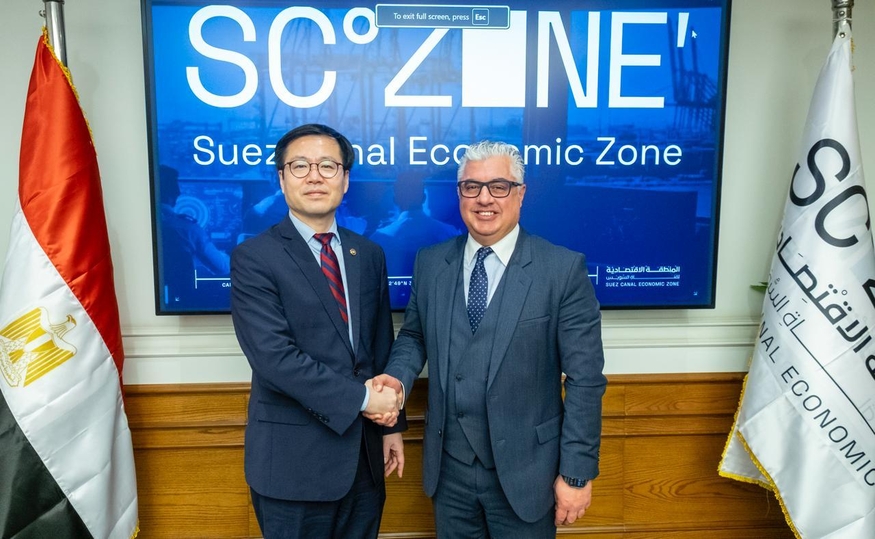
Yeo Han-koo, Seoul’s chief trade negotiator, recently met with Gamal El-Din, chairman of the Suez Canal Economic Zone Authority, to explore ways Korean manufacturers could establish production facilities in the zone, Egyptian officials said. Discussions centered on export-driven sectors including electronics, textiles and automobiles, industries heavily exposed to North American demand.
At the heart of the talks was the Qualified Industrial Zones program, a trade arrangement linking the U.S., Egypt and Israel that allows goods produced in designated Egyptian zones to enter the U.S. market under preferential tariff terms. Korean officials said the framework could enable companies to shift production to Egypt while retaining cost competitiveness in the U.S., as manufacturers reduce reliance on traditional Asian production hubs.
Straddling one of the world’s busiest shipping lanes, the Suez zone has intensified efforts to attract foreign manufacturers as Egypt seeks to expand export-oriented industrial capacity. Government officials said Cairo is prepared to support large-scale investments aimed at transforming the zone into a regional manufacturing platform serving both Europe and the U.S.
To facilitate entry for Korean firms, Mr. Yeo proposed creating a permanent consultation channel between South Korea’s trade promotion agency and the Suez zone authority to address regulatory hurdles and operational challenges faced by foreign investors.
The discussions unfolded alongside broader efforts to deepen economic ties between Seoul and Cairo. Mr. Yeo also signed a joint declaration with Egypt’s minister of investment and trade committing both governments to advance negotiations on a Comprehensive Economic Partnership Agreement, which would cover trade in goods, services and broader economic cooperation.
Officials said preparatory work has been ongoing since a trade and economic partnership memorandum was signed in 2022, with both governments agreeing at a leaders’ meeting last November to move toward formal negotiations. Recent talks focused on domestic approval procedures and steps to launch negotiations in the near term.
The talks highlight how exporters are increasingly turning to regional trade arrangements and unconventional manufacturing bases to maintain access to the U.S. market, as global production patterns continue to shift under geopolitical and policy pressures.