
South Korea’s bid to become a major player in the global fighter aircraft market is gaining momentum as the KF-21 Boramae, the country’s first domestically developed supersonic fighter jet, attracts growing interest from potential overseas buyers.
Officials at Korea Aerospace Industries (KAI), South Korea’s leading aircraft manufacturer, said multiple countries have expressed interest in the KF-21, underscoring Seoul’s broader ambition to expand beyond tanks, artillery systems and trainer aircraft into one of the world’s most competitive defense sectors.
The aircraft, jointly developed with Indonesia, was originally conceived to replace South Korea’s aging fleet of F-4 and F-5 fighters. But as the program moves from development to production, the jet is increasingly being viewed as a potential export platform capable of competing for contracts across Asia, the Middle East and other emerging defense markets.
During a recent visit by an Indonesian delegation to KAI’s headquarters in Sacheon, company officials said the fighter has generated inquiries from several prospective customers. Interest has also reportedly emerged from countries including the United Arab Emirates and the Philippines.
For South Korea, the growing attention represents more than a potential commercial success. It reflects the country’s rapid emergence as a defense exporter at a time when governments around the world are increasing military spending and seeking alternatives to traditional suppliers.
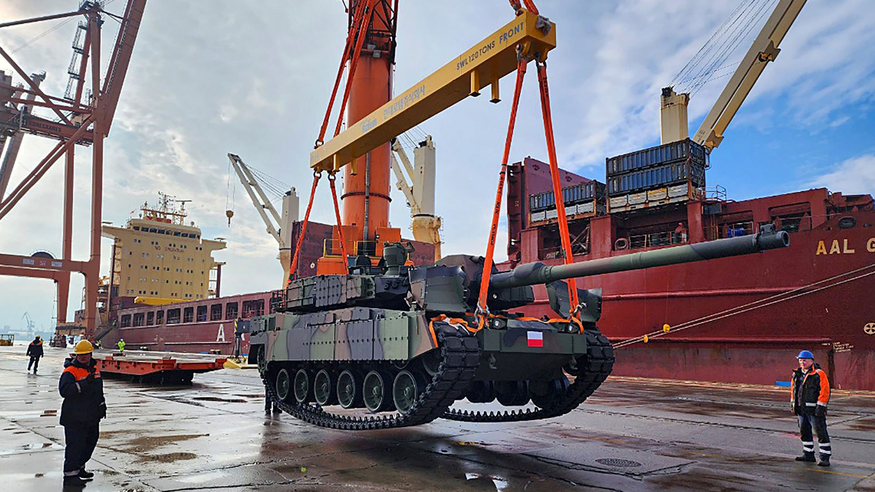
Over the past several years, South Korea has transformed itself into one of the fastest-growing arms exporters, with products such as the K2 main battle tank, K9 self-propelled howitzer, FA-50 light combat aircraft and Chunmoo rocket system winning contracts across Europe, Asia and the Middle East.
The KF-21 is widely seen as the next test of that strategy.
Unlike fifth-generation aircraft such as the F-35, produced by U.S. defense giant Lockheed Martin, the KF-21 is designed as a lower-cost alternative that can integrate with Western defense systems while offering advanced capabilities at a more affordable price point. That positioning could appeal to countries seeking to modernize their air forces without committing to large fleets of more expensive aircraft.
Indonesia remains a critical partner in the project. Jakarta participated in the fighter’s development program and is expected to receive one of the prototypes under the bilateral agreement. Although Indonesia originally planned to acquire 48 aircraft, KAI officials said discussions regarding future purchases remain ongoing and no final procurement decision has been reached.
The company is also seeking to deepen industrial cooperation with Indonesia. KAI has expressed interest in bringing Indonesia’s state-owned aerospace manufacturer, PT Dirgantara Indonesia, into the KF-21 supply chain, extending a partnership that began with exports of the KT-1B trainer aircraft more than two decades ago.
Anticipating future export demand, KAI is preparing to expand production capacity. The company plans to invest approximately $110 million in facilities this year and around $160 million next year as it positions itself for potential overseas orders.
The challenge ahead remains significant. The global fighter jet market has long been dominated by U.S. and European manufacturers with decades of export experience and established political relationships. Yet the increasing interest in the KF-21 suggests South Korea may be carving out a new niche between lower-cost legacy fighters and the most advanced Western platforms.
For Seoul, the aircraft represents more than a military asset. It is a measure of whether South Korea can translate its growing defense manufacturing capabilities into sustained influence in one of the most strategically important segments of the global arms industry.