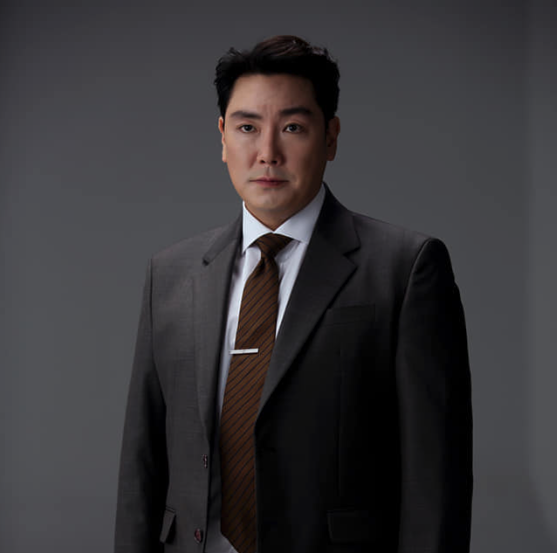
South Korean actor Jo Jin-woong announced his retirement after revelations about his criminal record as a minor sparked public controversy.
On December 6, Jo released a statement through his agency, Saram Entertainment, apologizing for his past behavior and confirming that he would end all professional activities as an actor. “I humbly apologize to everyone who has trusted and supported me. I will take full responsibility for my past mistakes and devote myself to personal reflection,” he said.
The controversy began when media reports revealed that Jo had committed serious crimes as a high school student, including vehicle theft and involvement with violent gangs, resulting in juvenile detention. Some reports also linked him to sexual assault, which his agency denied, stating that Jo had no involvement in such acts.
Following these revelations, Jo’s agency confirmed that he had engaged in wrongful behavior as a minor, and the actor announced his retirement the next day.
Jo began his acting career in 1996 by joining Theater Dongnyeok and later entered the film industry in 2004 with the movie Once Upon a Time in High School. He adopted the stage name “Jo Jin-woong,” derived from his father’s name, to mark a turning point from theater to film.
Over the years, Jo built a prominent career in Korean cinema, appearing in notable films including A Dirty Carnival, The Front Line, Nameless Gangster, The Age of Shadows, The Outlaws, The Battleship Island, Assassination, The Sheriff in Town, Believer, Black Money, and Midnight Runners.
The recent controversy has disrupted ongoing and upcoming projects. Jo was set to reprise his role in tvN’s Signal Season 2, but the show’s broadcast schedule is now uncertain. He was also replaced as the narrator in SBS’s four-part documentary ‘War with Gangs’, with previously aired episodes re-recorded with a new voice.
Beyond acting, Jo has participated in national commemorative events, including narrating documentaries about Korean independence activist General Hong Beom-do and attending Liberation Day ceremonies. He also took part in repatriating Hong Beom-do’s remains in 2021 as a special envoy, a journey later documented in a KBS program that has since been made private on YouTube.
Jo’s retirement marks the end of a career that spanned nearly three decades, highlighting how past actions—particularly those committed as a minor—can have lasting impacts on public figures in South Korea’s entertainment industry.