South Korea may be on the verge of a new kind of labor conflict—one that pits human workers against humanoid machines—after Hyundai Motor Co.’s powerful union vowed to block robots from entering factory floors without a formal labor-management agreement.
The warning raises the prospect of escalating tension just as Hyundai Motor Group pushes deeper into robotics and artificial intelligence, betting that the next frontier of manufacturing competitiveness will be defined not only by electric vehicles and software, but by “physical AI” capable of doing human-like work inside plants.
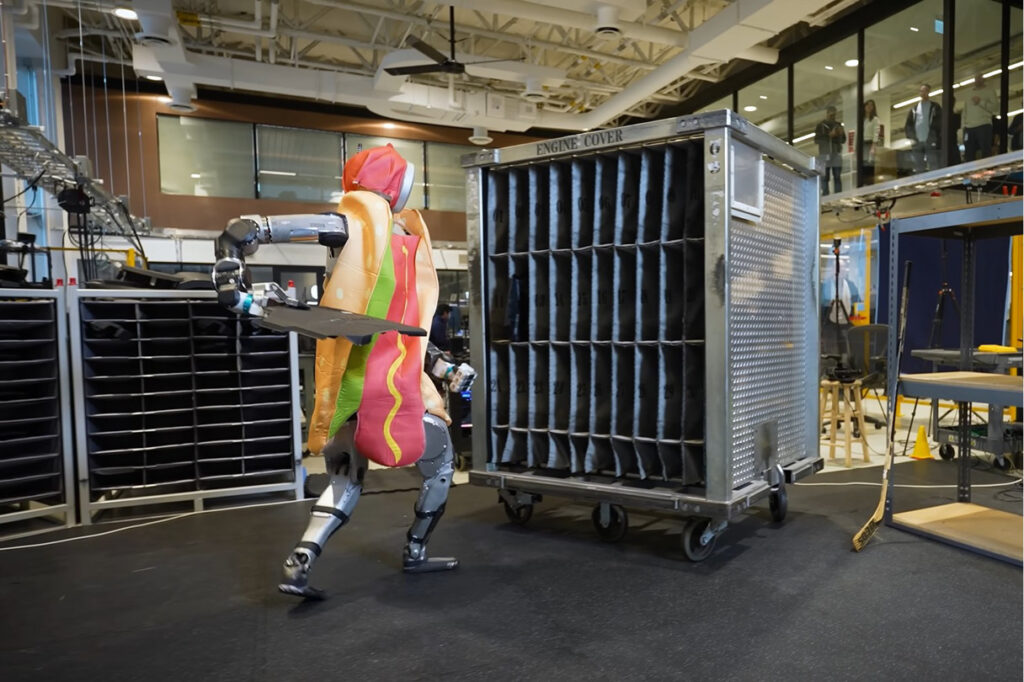
The statement, released Jan. 22 by the Hyundai Motor branch of the Korean Metal Workers’ Union, directly targeted “Atlas,” a humanoid robot unveiled earlier this month by Hyundai Motor Group at CES 2026 in Las Vegas. Hyundai has positioned the robot as a central pillar of its long-term strategy to blend automation with AI-driven mobility and industrial operations.
“We will not tolerate a single robot entering the workplace without union consent,” the union said in a bulletin. “Unilateral decisions on automation and production relocation threaten jobs and undermine labor-management trust.”
Hyundai Motor Group has said it plans to mass-produce as many as 30,000 Atlas humanoid robots a year by 2028, with manufacturing bases in the U.S. The company expects the robots to be deployed across manufacturing and logistics operations over time, signaling an ambition to build a vertically integrated robotics supply chain alongside its automotive business.
Investors quickly embraced the narrative. Hyundai Motor shares surged following the CES presentation as markets reassessed the company less as a traditional automaker and more as an emerging robotics-and-AI player—an increasingly valuable identity in a global manufacturing race defined by automation and labor constraints.
The union acknowledged that shift in perception, but warned that the upside for shareholders could translate into insecurity for workers.
“Hyundai’s core business is automobile manufacturing and sales,” the union said. “Yet the recent stock rally reflects a revaluation of the company as a robotics and AI firm. For workers, that re-rating signals growing job insecurity.”
At the heart of the dispute is a blunt economic comparison. According to union estimates, staffing a single position around the clock would require three workers earning an average annual salary of roughly $75,000 each—totaling about $225,000 a year. A humanoid robot, after an upfront purchase, would require mainly maintenance costs, which industry analysts estimate at about $10,500 per unit annually, while operating nearly 24 hours a day aside from battery replacement.
Public disclosures show major listed Hyundai Motor Group affiliates spend roughly $97,000 per employee per year on labor costs. The union argues those figures make humanoid robots an attractive tool for long-term labor-cost reduction—creating pressure not just on wages, but on the overall bargaining power of factory workers.
The fight is also tied to a broader anxiety: that automation will accelerate the shift of production away from South Korea. The union criticized Hyundai’s expanding overseas manufacturing footprint, arguing that reduced output at domestic plants is linked to growing capacity at Hyundai Motor Group Metaplant America in Georgia. The U.S. facility currently has annual capacity of 300,000 vehicles, and Hyundai plans to expand it to 500,000 vehicles by 2028.
Union leaders warned that the combination of robot deployment and offshore production shifts could destabilize labor relations at one of South Korea’s most strategically important industrial employers.
“If management is prepared to see labor relations collapse, we are ready to show them how far this can go,” the union said.
Hyundai Motor Group has not issued a formal response to the union’s statement. But the standoff highlights how South Korea—one of the world’s most advanced manufacturing economies—could become an early testing ground for the social and political consequences of humanoid robotics.
For Hyundai, Atlas represents a bet that the next productivity leap will come from machines designed to work like people. For the union, it represents something else entirely: the beginning of a workplace battle where the competitor isn’t another company, but a robot built to replace the worker standing next to it.