The global travel-retail industry is still recalibrating after the pandemic, with airport and inflight duty-free operators facing thinner margins, volatile passenger flows and rising financing costs. As those pressures persist, companies are increasingly reassessing whether overseas investments built for a pre-2020 growth cycle still justify the capital they tie up.
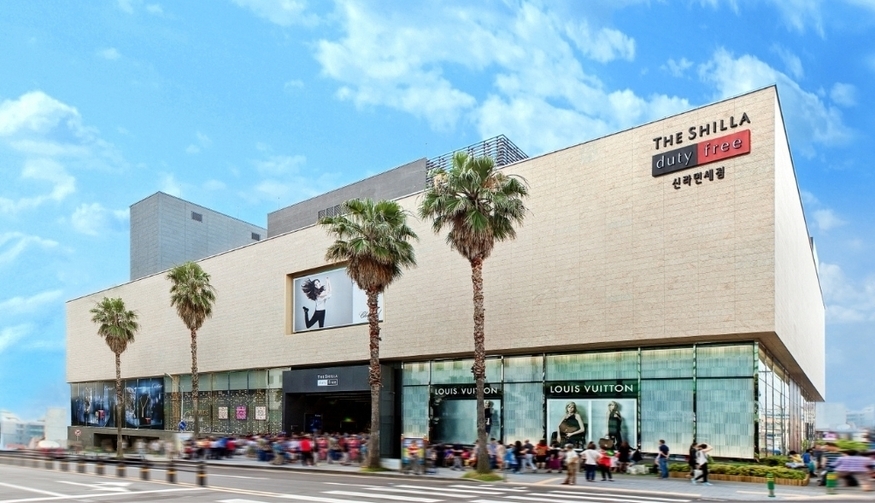
Against that backdrop, Hotel Shilla, a South Korean hotel and duty-free operator affiliated with Samsung Group, has sold its entire 44% stake in 3Sixty Duty Free, fully exiting a U.S. investment that once anchored its North American expansion strategy. The stake was repurchased by 3Sixty through a buyback, bringing to a close a partnership formed in 2019.
Hotel Shilla invested about $121 million at the time to become the second-largest shareholder in 3Sixty, betting that exposure to U.S. airport and inflight duty-free operations would diversify its largely Asia-focused business and provide a long-term growth engine. The deal reflected a broader industry assumption that international air travel would continue to expand steadily, rewarding operators with global footprints.
That assumption has been challenged. The prolonged collapse in cross-border travel during the pandemic, followed by an uneven recovery, forced operators to absorb fixed concession costs amid unpredictable traffic. Higher interest rates and currency volatility further increased the opportunity cost of holding minority stakes overseas, particularly where strategic control is limited.
Hotel Shilla’s exit underscores that shift in priorities. Converting a long-held U.S. equity investment into cash points to a preference for balance-sheet flexibility and near-term profitability over maintaining an international presence for its own sake. The decision aligns with a wider pullback by travel-retail groups that are narrowing their focus to businesses with clearer paths to sustainable returns.
The timing is closely tied to the company’s financial position. In the fourth quarter, Hotel Shilla’s travel retail revenue rose 10.5% from a year earlier to about $583 million, but the segment remained loss-making. Operating losses narrowed to roughly $14 million from $29 million a year earlier, signaling gradual improvement but highlighting continued structural strain. The company has also been trimming lower-margin operations, including plans to relinquish certain concessions at Incheon International Airport, illustrating how even major hubs are being reassessed through a profitability lens.
Proceeds from the 3Sixty sale are expected to be directed toward digital upgrades and operational efficiency rather than new overseas equity investments. Management has emphasized tighter execution and earnings recovery as priorities amid ongoing uncertainty in the duty-free market.
The move carries implications beyond a single transaction. When one of Asia’s largest duty-free operators unwinds a U.S. investment once viewed as strategic, it reflects how the global travel-retail industry is still in a period of adjustment. Expansion is no longer the default objective. Instead, capital discipline and selective exposure are shaping how companies redefine growth in an industry still adapting to a fundamentally changed travel landscape.