South Korea’s shipbuilding industry is moving beyond the commercial vessels that made it a global manufacturing power. The next competition is increasingly centered on naval ships and offshore energy facilities, businesses tied not only to trade but also to defense spending, energy security and geopolitical influence.
Hanwha Ocean, one of South Korea’s three major shipbuilders and a defense contractor owned by the industrial conglomerate Hanwha Group, has become one of the clearest examples of that shift. After losing a closely watched Canadian submarine competition, the company is pursuing multibillion-dollar offshore oil projects and naval contracts across Asia, the Middle East and Europe.
The most valuable opportunity is a floating production, storage and offloading vessel for the Venus oil development off Namibia. The project is led by TotalEnergies, the French energy company, and is targeting its first oil production in 2030. A final investment decision is expected in the second half of this year.
Known as an FPSO, the vessel is essentially a floating oil production facility. It processes crude extracted from an offshore field, removes water, sand and other impurities, stores the oil and transfers it to tankers without requiring a permanent pipeline to shore.
The Venus vessel is estimated to be worth about $3 billion. Hanwha Ocean is reportedly seeking two FPSO orders this year, contracts that could quickly transform an order book that currently trails those of its South Korean competitors.
The company faces SBM Offshore, a Netherlands-based specialist that is working with Chinese shipyards. SBM’s approach divides construction among several facilities to lower costs. Hanwha Ocean is offering a different model by proposing to build the entire facility at one shipyard, which it says would provide tighter quality control and a more predictable delivery schedule.
Winning the project would be important for more than its size. Hanwha Ocean’s offshore energy division reported an operating loss of about $50 million in the first quarter, renewing concerns about a business that requires large investments and can suffer long gaps between major orders.
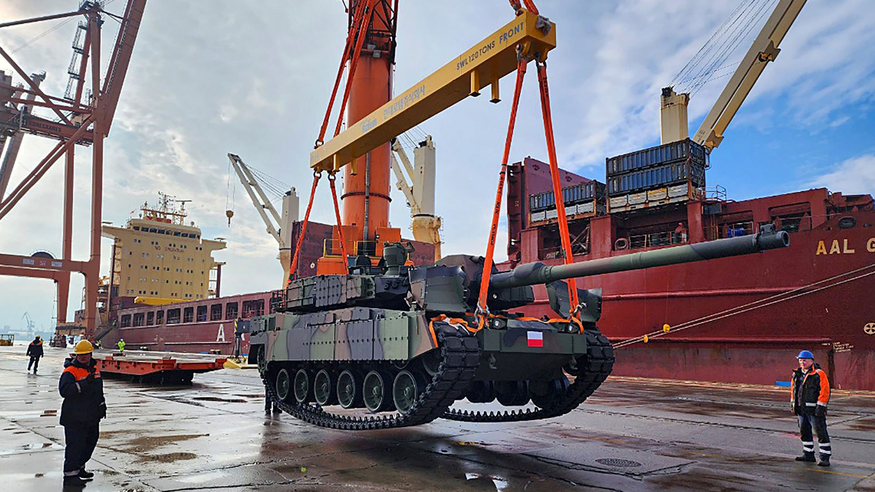
The company’s strategy also reflects a broader change in South Korean shipbuilding. Commercial vessels remain central to the industry, but competition is increasingly intense and large naval programs can offer longer production schedules, government-backed customers and opportunities for maintenance and follow-on orders.
Hanwha Ocean is now competing for Thailand’s planned 4,000-ton frigate, an initial project valued at about $540 million. Additional vessels could turn it into a multibillion-dollar program. Its main competitor is HD Hyundai Heavy Industries, another major South Korean shipbuilder that produces both commercial vessels and warships.
More naval opportunities are emerging elsewhere. Saudi Arabia is considering the acquisition of four to six submarines and five frigates, while the Philippines is pursuing two submarines and Greece is considering four. Those competitions could put South Korean builders against established European defense companies in markets they once dominated.
The expansion matters beyond South Korea. Governments are increasing defense spending as concerns grow over maritime security, supply routes and regional military competition. At the same time, many countries lack the domestic shipyard capacity to replace aging fleets quickly.
South Korea offers an alternative. Its shipbuilders combine large-scale commercial production, experience with complex vessels and an expanding defense business. Hanwha Ocean has also been strengthening its connection to the U.S. market through Hanwha Group’s ownership of Philly Shipyard, giving the Korean company a presence inside an American shipbuilding industry that has struggled with limited capacity and delayed naval programs.
The company’s overseas ambitions suffered a setback in Canada. Hanwha Ocean had reached the shortlist for the Canadian Patrol Submarine Project, a plan to acquire as many as 12 submarines for the Royal Canadian Navy, but failed to secure the contract after competing with Germany’s Thyssenkrupp Marine Systems.
The defeat weighed heavily on investor sentiment. Hanwha Ocean’s shares fell sharply after the result, reflecting expectations that the Canadian program could have anchored its international naval business for years.
The company is also behind its domestic rivals in overall orders. Hanwha Ocean has won contracts for 27 vessels worth about $4.6 billion this year. HD Korea Shipbuilding and Offshore Engineering, the shipbuilding holding company of HD Hyundai Group, has secured about $16 billion, while Samsung Heavy Industries, the shipbuilding arm of South Korea’s Samsung conglomerate, has recorded roughly $10 billion.
An FPSO victory would narrow that gap quickly. Two projects worth around $3 billion each could push Hanwha Ocean’s annual order total toward $10 billion and reduce concerns about its offshore division.
The larger test is whether South Korean shipbuilders can convert their commercial manufacturing strength into influence over two markets that governments increasingly view as strategic. Tankers and container ships carry global trade. Submarines, frigates and offshore production facilities determine who protects that trade and who controls the energy that supports it.
Hanwha Ocean’s effort to recover from its Canadian defeat is therefore more than a corporate comeback attempt. It is part of South Korea’s broader push to establish its shipyards as suppliers of military power and energy infrastructure at a time when both are becoming harder for many countries to build on their own.