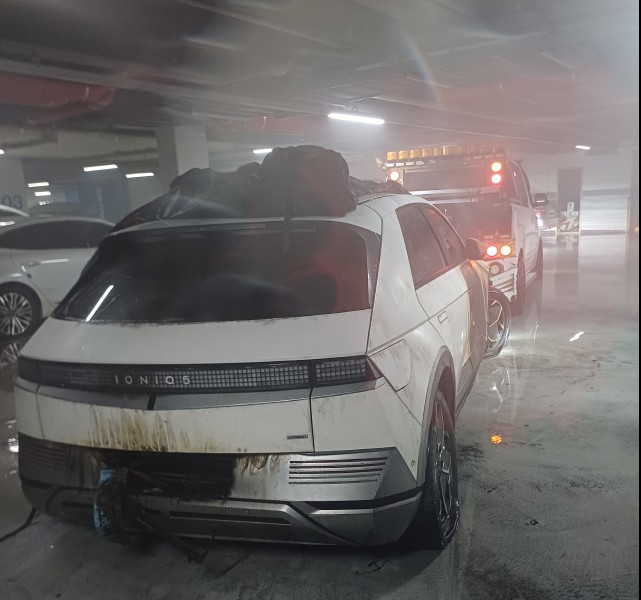
Electrical factors accounted for roughly 25% of electric-vehicle fires recorded in South Korea in recent years, according to data released on September 9 by the country’s National Fire Agency.
A total of 212 EV fires were reported between 2021 and 2024, with 52 cases attributed to electrical causes—the largest single category.
Among those electrical incidents, 35 cases (67%) were caused by short circuits that allowed excessive current to flow through the system. Of those, 17 cases involved short circuits where the exact cause could not be identified.
Authorities also recorded 50 fires whose causes remain unknown.
Other causes included carelessness—such as discarded cigarettes—accounting for 43 cases, followed by 32 fires linked to traffic accidents. Chemical and mechanical factors each accounted for 12 cases.
The number of EV fires increased sharply during the period. Authorities recorded 24 cases in 2021, rising to 43 in 2022, 72 in 2023, and 73 in 2024—more than tripling over three years.
More than half of the fires occurred while vehicles were in operation. 108 incidents happened during driving, compared with 58 fires while vehicles were parked and 37 during charging.
However, in cases involving electrical causes or unidentified origins, fires occurred more often while vehicles were stationary—either parked or charging—than while in motion.
The ignition point varied widely. Eighty-nine cases originated in areas outside typical locations such as the engine compartment, cargo area, trunk, or passenger seats. In 25 incidents, investigators were unable to determine where the fire began.