A quiet shift has been unfolding in the frozen-food aisles of American grocery stores. Dumplings, once treated as a niche item tucked into an “ethnic foods” corner, are increasingly part of the everyday freezer rotation. They sit alongside pizzas and prepared meals, marketed not as novelties but as versatile, weeknight staples.
One brand has come to define that transition. Bibigo Mandu, produced by CJ CheilJedang, a South Korea–based food manufacturer with global operations spanning processed foods, frozen meals and ingredients, has emerged as the dominant player in the U.S. frozen dumpling category.
Frozen meals have undergone a rehabilitation in recent years. As work patterns shifted and more meals moved back into the home, convenience stopped being synonymous with compromise. Products that could be prepared quickly while still offering variety and perceived quality gained traction. Dumplings fit that moment neatly: adaptable across meals, compatible with multiple cooking methods, and familiar enough to require little explanation.
When CJ CheilJedang entered the U.S. market in 2010, it resisted the obvious move of labeling its product simply as “dumplings.” Instead, it kept the Korean term “mandu,” effectively carving out a distinct identity rather than competing head-on with established Chinese-style brands. Over time, that distinction helped Bibigo stand out in freezer cases crowded with similar-looking offerings.
The company’s timing proved favorable. As interest in frozen and ready-to-cook foods expanded, Bibigo benefited from early investments in U.S.-based production and national distribution. Its growth has since mirrored a wider global trend. According to ResearchAndMarkets, the global dumpling market is expected to grow from $8.6 billion last year to $12.5 billion by 2032, with annual growth of about 5.5 percent. Analysts cite the same drivers visible in the United States: online grocery adoption, improved cold-chain logistics and a broader acceptance of frozen food as part of daily eating.
In its industry outlook, ResearchAndMarkets identified CJ CheilJedang as one of the companies likely to shape the market’s next phase, pointing to its scale in frozen dumplings and its global manufacturing footprint. Bibigo’s trajectory illustrates how a product long associated with regional cuisine can become standardized across markets without losing its identity.
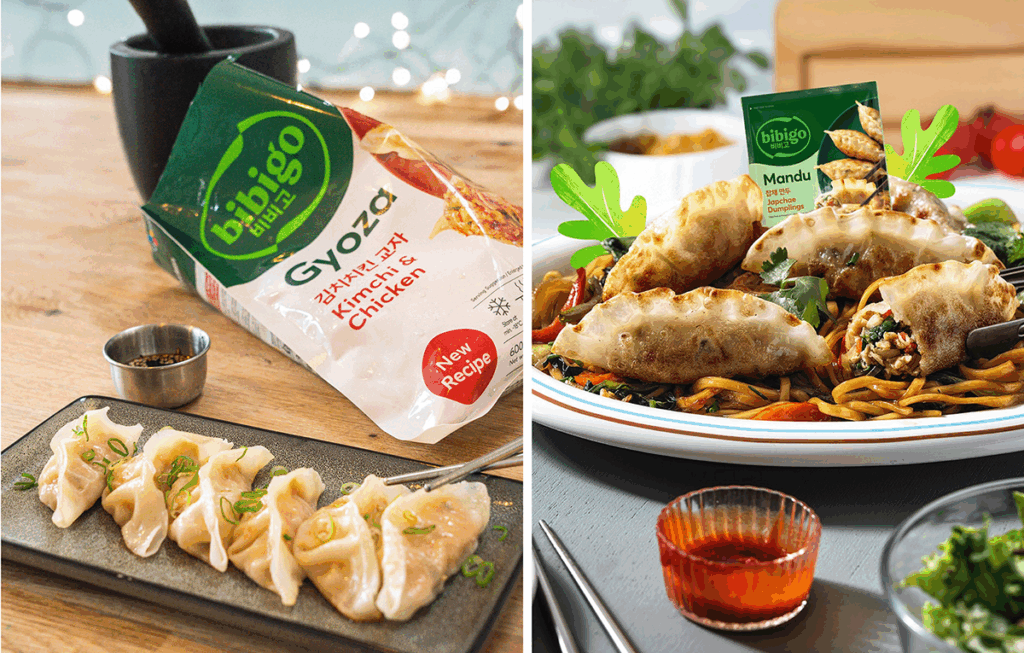
Product design has been central to that shift. Bibigo Mandu differs from traditional Chinese-style dumplings by using thinner wrappers and vegetable-forward fillings, presenting a lighter profile that aligns with health-conscious preferences. Chicken-based options, bite-sized formats and compatibility with pans, steamers and air fryers have made the product easy to integrate into American kitchens without changing cooking habits.