The $40B CPSP project may see the ‘last man standing’ as early as June. Canada is set to choose between Hanwha-led K-team and Germany’s TKMS. The prospective operator of the newly supplied submarines, the Royal Canadian Navy, emphasized ‘quick delivery’, but also noted there to be other deciding factors than mechanical specs such as economic impact.
Industry observers said Canada would accept the final proposals by next month before commencing the assessment process. After that, they will name a preferred bidder and engage in a direct conversation for negotiation. To cover the last mile of the long journey, the team members – Hanwha Ocean, HD Hyundai Heavy Industries, Ministry of National Defense and Defense Acquisition Program Administration – are putting an all-out effort.
◇”Rapid Delivery”…Gradual Localization Planned
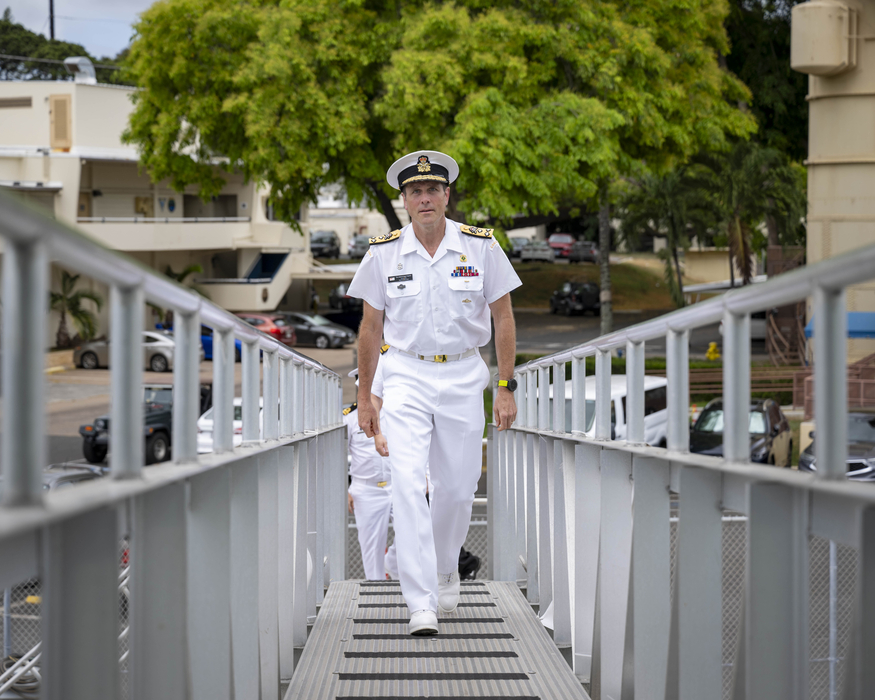
Angus Topshee, commander of the RCN, told The Guru “the decision could be made before the summer.” It signifies that they have set the crucial timeline within the first half of the year. “However, the decision makers are burdened with a mountain of considerations. It is hard to predict how long it will take before the final bidder is named, but we are striving to waste no time.”
The CPSP project was initiated to replace 4 legacy Victoria-class submarines the RCN has operated with a maximum of 12 modern 3000-ton diesel vessels. Hanwha Ocean’s KSS-Ⅲ Batch-Ⅱ and TKMS’s 212CD are strong candidates. The final proposals must be submitted by March 2nd.
Topshee stressed that the most important assessment criterion is ‘rapid delivery.’ The submarines the RCN currently operates are so outdated for modern naval activities, according to him, that Canada even wills to maintain an open option of adopting interim reinforcements. The bidders were already requested to include solutions for the situation in the proposals.
Technology and knowledge transfer for sovereign operation is also pivotal. “We must be able to handle the repairs and maintenance ourselves for the asset operation to be truly strategic,” he says. “Access to intellectual property and technical data must be ensured.” The government asked both bidders for detailed plans to achieve such goals, according to him.
Topshee adjusted his tone in a more pragmatic way when the topic changed to actual shipbuilding. He admitted that Canada lacks skills and resources to build submarines, and developing required capabilities was not planned for the foreseeable future, either. “We expect the first few vessels to be delivered off-the-shelf. But gradual integration of Canadian technologies and equipment into them at a later stage is also wished for. Incorporation of Canadian tech into Korean or German submarines on active duty is the final goal.”
◇ Economic Impact: The Deciding Factor for the Final Choice
Commander Topshee has been inspecting the shipyards of the candidates. Last November, he visited Korea to tour Hanwha Ocean and HD Hyundai Heavy Industries.
“I confirmed without a doubt that Korea is a global leader in shipbuilding,” he said. “The scale of the yards, delivery speed, and engineering support systems were impressive. I am also aware that Korean companies helped improve the productivity of the Halifax shipyard in Canada through process support.”
Regarding the TKMS shipyard in Kiel, Germany, he noted its specialized submarine production facilities, comparing it to Hanwha’s shipyard which produces various merchant ships and naval vessels. “The approaches are different, but I was deeply impressed by the quality of both candidates,” Topshee evaluated.
Since both sides have already proven their shipbuilding capabilities, the CPSP decision is expected to go beyond just military judgment. Topshee said, “Both submarines are suitable for the RCN, so the Canadian government can decide which purchase is most beneficial from a holistic perspective.”
Regarding concerns about the lack of submarine operators, he diagnosed that they currently have enough personnel for two submarines. “We plan to cooperate with the navies of Korea, Germany, and Norway to train more crews. The provincial governments of Nova Scotia and British Columbia are also working on workforce development,” he added, expressing hope that the project would create high-quality jobs for generations.
In June, the RCN and the ROK Navy will conduct their first joint naval exercise near Canada. “Various operational drills are planned, including a program where Canadian crews train on Korean submarines,” Topshee emphasized, welcoming opportunities to cooperate with allies. He also noted close coordination with Korea, maintaining ship deployments in the Indo-Pacific region.
Starting with the CPSP, the RCN intends to accelerate the introduction of new vessels. This year’s budget will be tripled for a massive modernization.
Regarding additional vessel inductions, Topshee said the basic policy for non-submarine vessels is domestic construction, but he didn’t completely close the door on overseas construction. He mentioned Australia’s case of ordering frigates to be built in Japan first, noting that theoretically, Canada could make a similar decision. “In that case, Korea would be a great partner,” he said, though adding there are no concrete plans yet.