Starbucks has found itself pulled into one of South Korea’s most politically sensitive historical debates after a marketing controversy involving its local business reignited painful memories tied to the country’s authoritarian past.
What began as backlash over promotional imagery used by Starbucks Korea quickly evolved into a broader national conversation about historical trauma, political symbolism and the risks global brands face when operating inside deeply polarized societies.
The controversy erupted around the anniversary of May 18, a date inseparable from the 1980 Gwangju Uprising, one of the defining moments in South Korea’s democratization movement.
During the uprising, pro-democracy demonstrators in the southwestern city of Gwangju protested military rule after authoritarian forces seized power through a coup. South Korean troops later suppressed the uprising with force, leaving hundreds dead or missing. More than four decades later, the event remains among the country’s most emotionally charged political tragedies.
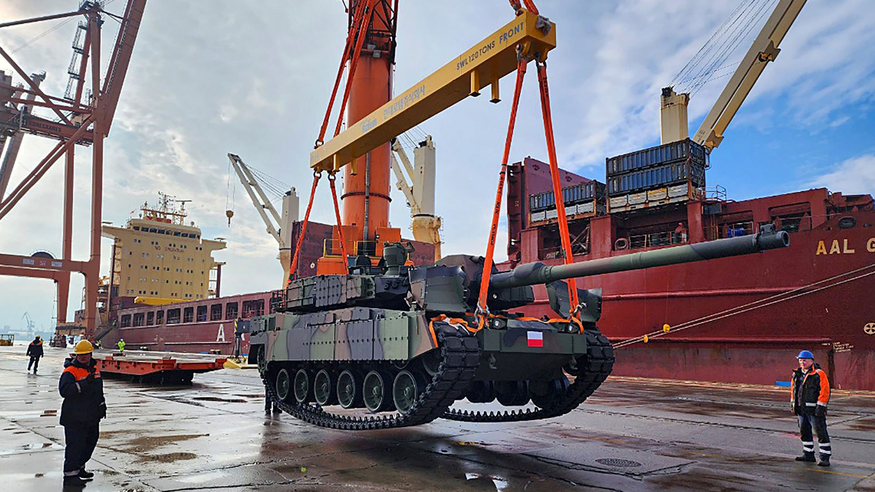
Criticism intensified after Starbucks Korea used imagery that some consumers said resembled military tanks during the commemorative period surrounding the anniversary.
Opponents accused the company of insensitivity, arguing that military-themed visuals carried particular historical weight during a period associated with remembrance of state violence and democratic sacrifice.
The backlash widened further online after some conservative social-media users posted Starbucks purchases alongside anti-communist slogans and politically charged messages, transforming what began as a branding dispute into a larger ideological confrontation.
The controversy soon spread beyond Starbucks Korea itself and placed mounting pressure on Shinsegae Group, the retail conglomerate that controls Starbucks operations in South Korea through subsidiary E-Mart.
Shinsegae, one of the country’s largest retail groups, became the controlling shareholder of Starbucks Korea in 2021 after raising its ownership stake to 67.5%, while Singapore sovereign wealth fund GIC acquired the remaining shares.
Although Starbucks Korea is locally operated under Shinsegae’s management, the scale of the backlash ultimately forced Starbucks headquarters in the U.S. to intervene publicly.
The company issued an apology, saying the incident “should never have happened” and that it was closely monitoring developments in South Korea.
The fallout has continued to expand.
Civic groups later filed police complaints against Chung Yong-jin and former Starbucks Korea Chief Executive Son Jeong-hyun on allegations including defamation and insult. Organizers of the Seoul Jazz Festival also announced plans to cancel a Starbucks promotional booth scheduled for this week’s event.
The dispute subsequently spread into a wider debate about corporate responsibility and historical memory after Lee Jae-myung publicly criticized a past advertisement by Musinsa, a major online fashion platform.
The advertisement referenced a phrase associated with the 1987 torture death of student activist Park Jong-chul, whose killing became a turning point in South Korea’s democracy movement.
At the time, the military-backed government falsely claimed Park died after investigators “hit the desk and he suddenly collapsed,” a statement that later became a lasting symbol of state brutality and official deception during the dictatorship era.
Together, the controversies have reopened broader questions in South Korea over how corporations navigate historical symbolism in a society where the legacy of authoritarian rule still shapes political identity and public emotion.
For multinational companies such as Starbucks, the episode also underscores how quickly local cultural and historical sensitivities can escalate into reputational crises with national political consequences.