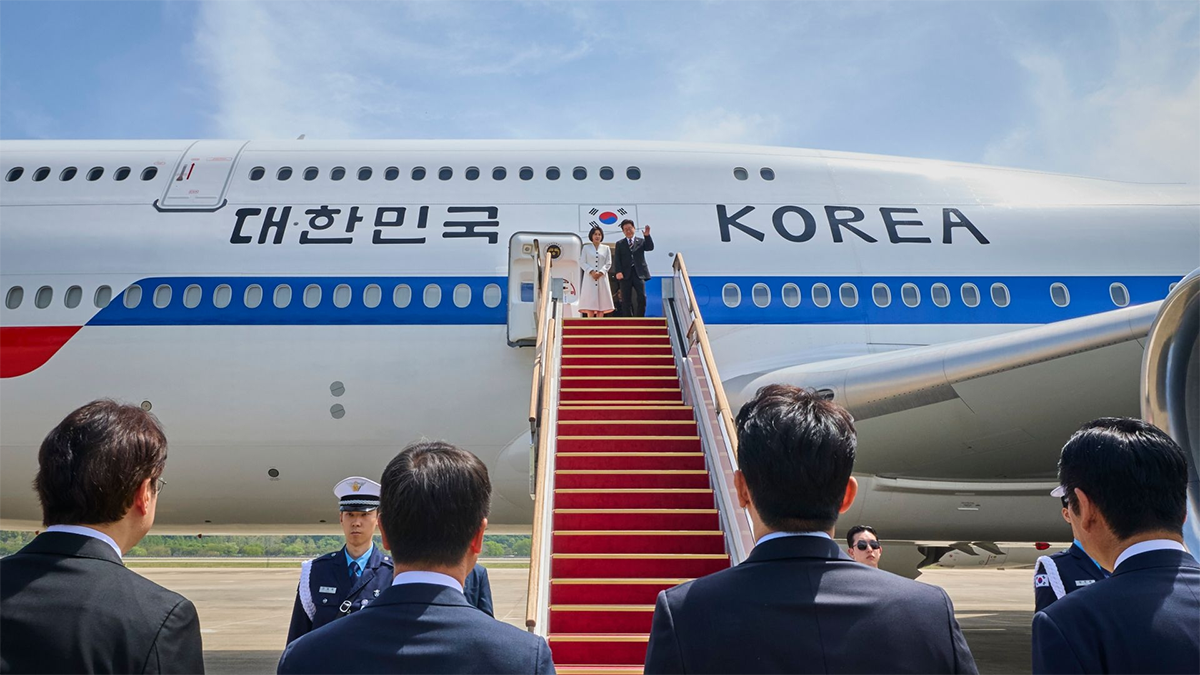
South Korea is set to create a new aviation powerhouse this December as Korean Air’s long-anticipated merger with Asiana Airlines formally concludes, combining the nation’s two largest full-service carriers into a single mega airline designed to strengthen the country’s position in the increasingly competitive global aviation market.
The unified carrier is scheduled to officially launch on Dec. 17, nearly five years after Korean Air moved to acquire Asiana during the height of the Covid-19 pandemic, when global air travel demand collapsed and consolidation became a strategic necessity.
For South Korea, the merger represents far more than corporate restructuring.
Government officials and industry executives increasingly view the integration as a national strategic initiative aimed at building a globally competitive aviation champion capable of rivaling larger U.S., Chinese and Middle Eastern carriers that dominate long-haul international traffic.
The merger marks the largest consolidation in South Korean aviation history, transforming Korean Air and Asiana from domestic rivals into a single large-scale operator with enhanced international reach, broader route flexibility and stronger economies of scale.
Once integrated, Korean Air is expected to significantly expand its global network across North America, Europe, Southeast Asia and the Middle East while reinforcing Incheon International Airport’s role as one of Asia’s premier transit hubs.
The strategy comes as competition intensifies across the global airline industry, where scale, operational efficiency and network breadth increasingly determine success.
South Korean policymakers have long argued that the country’s relatively limited domestic market cannot sustainably support two globally ambitious flagship carriers competing on overlapping international routes. Unlike larger economies such as the United States or China, South Korea relies heavily on international transfer passengers, export-driven business travel and cargo operations rather than domestic aviation demand.
By combining the route structures, fleets and operational assets of Korean Air and Asiana, the new entity is expected to improve route optimization, reduce redundancy and strengthen profitability while expanding South Korea’s leverage in global aviation alliances and premium passenger markets.
Industry analysts say the merger could create meaningful synergies through cost reductions, expanded long-haul services, improved aircraft utilization and stronger bargaining power in international partnerships.
Korean Air has already repaid approximately $2.4 billion in state-backed financial support previously extended to Asiana, removing one of the final financial barriers to full integration.
The airline is now positioned to absorb Asiana’s aircraft, workforce, airport slots and operational rights into a unified system while continuing to modernize pilot training, maintenance facilities and airport infrastructure.
Significant investments are already underway, including expanded aircraft hangars, engine maintenance centers and integrated safety systems near Incheon.
The merger also carries strategic importance for Incheon International Airport itself.
As major aviation hubs in Singapore, Hong Kong, Tokyo, Dubai and mainland China continue competing for transfer traffic, South Korea sees a larger unified national carrier as essential to preserving Incheon’s standing as a critical Northeast Asian gateway.
Still, concerns remain.
Consumer advocates and some regulators have warned that reduced domestic competition could eventually lead to higher fares on certain routes, diminished consumer choice and increased market concentration.
Questions surrounding loyalty program integration, slot redistribution and fare structures are also likely to remain under regulatory scrutiny.
Despite those concerns, the merger is widely seen as a transformational turning point for South Korea’s aviation sector.