
Kia Corp. has emerged as South Korea’s top-ranked large private-sector employer for workplace culture, underscoring a broader shift in how Korean companies—long defined by hierarchy and long hours—are retooling their internal cultures to compete for talent.
The ranking, released Jan. 28 by corporate data research firm CEO Score, analyzed employee reviews posted on workplace platforms such as Blind and JobPlanet, covering the country’s 500 largest companies by revenue. Unlike traditional employer surveys, the analysis reflects workers’ firsthand assessments of daily organizational life inside Korea’s biggest firms.
Among private companies with more than 10,000 employees, Kia posted the highest average score at 3.85 out of five, outperforming major banks and technology companies. The automaker ranked first in work-life balance and management quality—two areas where Korean manufacturing firms have historically struggled—while placing third in promotion opportunities and compensation.
Kia’s strong showing highlights a notable recalibration within Korea’s industrial sector. Once associated with rigid hierarchies and intense shop-floor cultures, leading manufacturers are increasingly investing in managerial accountability, predictable working hours and internal communication—factors that weigh heavily in employee-driven review platforms.
Korea’s major commercial banks followed closely behind. KB Kookmin Bank, Industrial Bank of Korea and NongHyup Bank each recorded an average score of 3.75, reflecting the enduring appeal of financial institutions in a labor market where stability and structured career paths remain highly valued.
Other companies in the top tier included Hyundai Mobis, Samsung SDS, Samsung Electro-Mechanics, Samsung Electronics, Hyundai Motor and LG Uplus—an indication that large Korean conglomerates, or chaebol affiliates, are no longer uniformly penalized for size alone in employee sentiment.
At the bottom of the rankings among large employers were Samsung Heavy Industries, discount retailer Daiso, Samkoo INC, POSCO and LG Display. Employee reviews cited heavy workloads, limited advancement opportunities and inconsistent management practices—long-standing criticisms often directed at labor-intensive and cyclical industries in Korea.
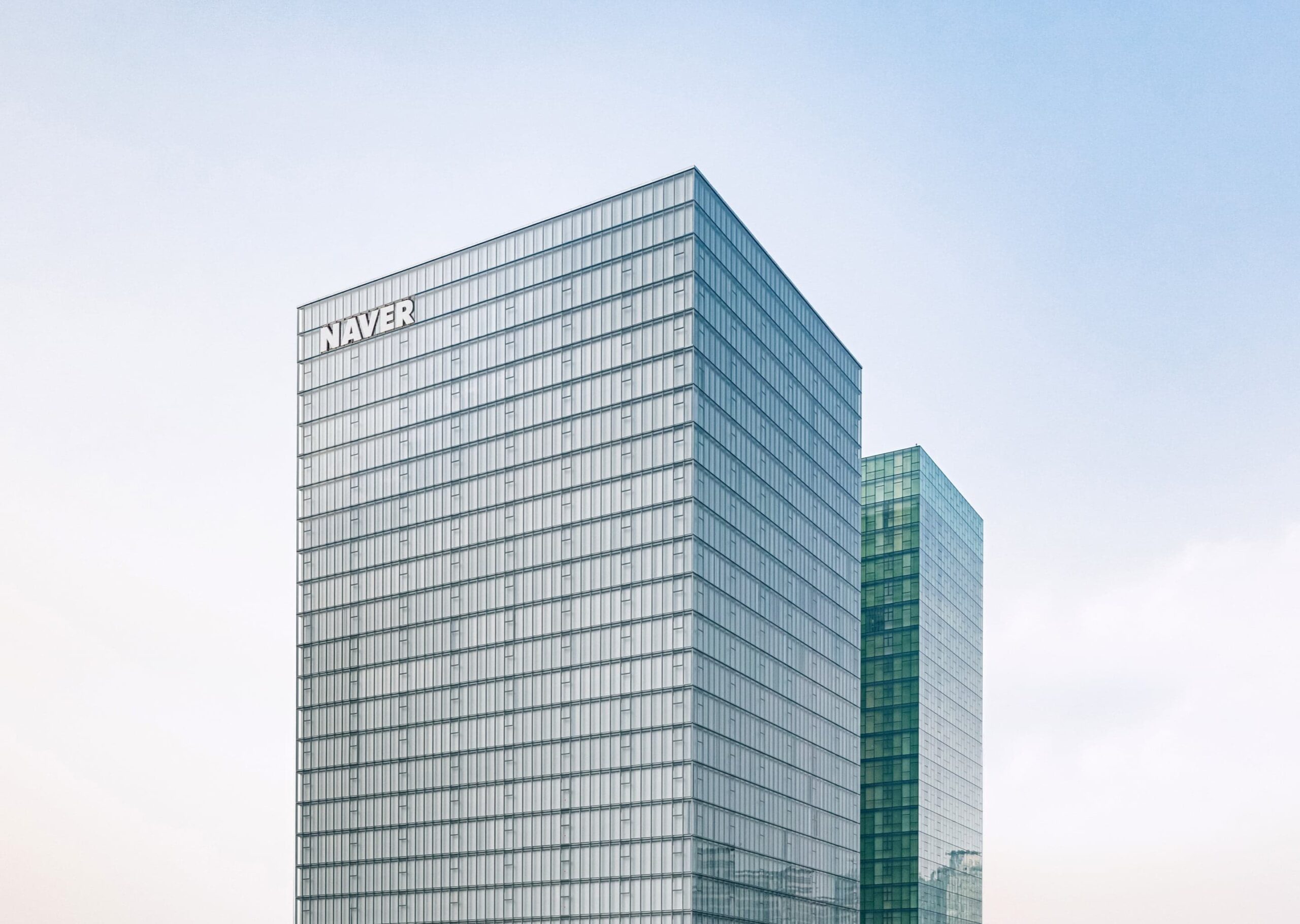
Smaller firms told a different story. Among private companies with fewer than 10,000 employees, Kyungdong City Gas recorded the highest score at 4.45, followed by Naver Financial and Naver Cloud. Energy-related firms featured prominently, suggesting that mid-sized companies with stable revenues and clear institutional frameworks can outperform larger peers in perceived workplace quality.
By contrast, the lowest-ranked mid-sized companies included pharmaceutical distributors, construction firms and auto-parts suppliers—sectors where frontline labor intensity remains high and organizational systems are often less formalized.
Industry-wide results further highlighted structural features of Korean employment. State-owned enterprises posted the highest average workplace culture score at 3.78, followed by holding companies, energy firms and banks. CEO Score attributed the strong performance of public enterprises to job security and well-defined institutional systems—qualities that continue to resonate strongly with Korean workers amid economic uncertainty.
Retail, consumer goods and auto-parts manufacturing ranked lowest by industry, reinforcing concerns that operational pressure and thin margins are translating into weaker employee experiences.
Taken together, the findings suggest that workplace culture has become a new competitive frontier for Korean employers. Compensation alone is no longer sufficient. Employees are increasingly weighing predictability, managerial trust and institutional fairness—signaling that Korea’s corporate culture, long slow to change, is now under visible pressure to evolve.