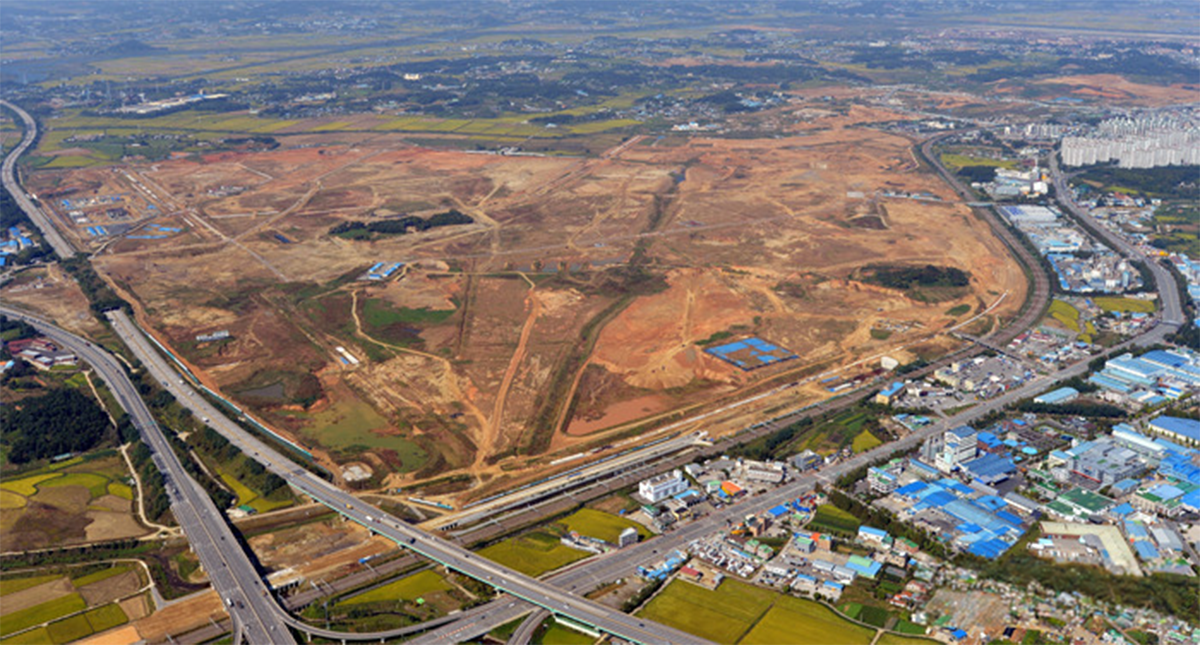

SK Hynix, one of the world’s largest memory-chip makers, is preparing a massive expansion of its manufacturing footprint in South Korea, lifting its planned investment for a new semiconductor complex in Yongin to roughly $600 billion—a fivefold jump from what the company projected just a few years ago.
The scale of the project underscores how forcefully the AI boom is reshaping the global chip industry. SK Hynix, a top supplier of the high-bandwidth memory favored by companies like Nvidia, has been racing to expand capacity amid what analysts describe as one of the most aggressive capital-spending cycles in memory production in more than a decade.
The Yongin site, located southeast of Seoul, has seen its cleanroom capacity rise by about 50 percent after regulators approved higher building limits. That change alone allows the company to build 1.5 times more cleanroom space than originally planned—enough to push total investment toward the $600 billion mark, according to industry officials briefed on the project.
The initiative, first announced in 2019 with an estimated cost of $120 billion, has since ballooned under the weight of construction delays, soaring equipment prices and a sharp increase in global demand for AI-related chips. SK Group chairman Chey Tae-won said recently that while the company’s overall domestic investment plan through 2028 had been set at $128 billion, Yongin by itself is now expected to absorb nearly that entire amount several times over.
The moves reflect an intensifying competition with Samsung Electronics, which has resumed construction of Fab 5 at its vast Pyeongtaek campus. Samsung’s new facility—expected to begin operations in 2028 following an investment of about $60 billion—comes as the company looks to narrow the gap with SK Hynix in next-generation AI memory. Samsung currently produces roughly 1.05 million wafers a month and is expected to lift that capacity to around 1.1 million once Fab 4 is fully ramped, with Fab 5 likely to match those volumes.
For Washington, Seoul’s aggressive expansion is a reminder that the most crucial nodes of the AI hardware supply chain remain concentrated in East Asia, even as the United States tries to build more domestic capacity under the CHIPS Act. And for global chipmakers, Korea’s investment spree is yet another signal that the race to supply the world’s AI infrastructure is entering a period defined by massive spending—and increasingly, by who can scale the fastest.