The early internet is old enough to inspire nostalgia. What many people remember is not necessarily slower computers or primitive websites, but a period when being online could feel more personal. Social spaces were places people actively customized, filling pages with favorite music, photographs, messages from friends and digital decorations that reflected who they were at the time.
That gives old internet brands something new platforms cannot easily manufacture. They already have memories attached to them. Bringing one back can reconnect users with an earlier period of their lives while giving a company an existing identity and community on which to build a new business. The difficult part is figuring out whether nostalgia can survive the transition from an old service to new technology.
South Korea is preparing to test that idea with Cyworld.
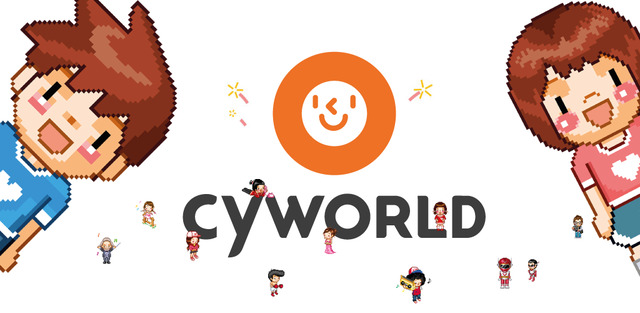
Cyworld was one of South Korea’s defining social networks of the 2000s. Its users created personal pages known as Minihompys, uploaded photos and diary entries, selected background music and decorated avatars and virtual rooms. Friends visited one another’s pages and left messages rather than simply encountering each other through an endless stream of recommended content.
The service also had its own digital economy. Users bought a virtual currency called Dotori, meaning acorns, with real money and spent it on music, decorations and other digital items. Dotori was not cryptocurrency. It was a closed payment system used within Cyworld, but it made paying for virtual identity and personalized online spaces part of everyday internet life for many South Koreans.
Those features help explain why another Cyworld revival is not simply an attempt to resurrect obsolete software. For former users, the service contains photographs, posts and other records of their lives from 2 decades ago. For its new operator, that accumulated attachment represents something that could potentially be rebuilt into a business.
The company making the latest attempt is Sigma Chain, a South Korean blockchain technology company that develops its own blockchain mainnet and provides Web3 infrastructure and decentralized solutions. The company has also previously developed blockchain based social media services, making the Cyworld project an extension of technology it has already tried to apply to online communities.
Sigma Chain plans to begin a Cyworld beta service in October, followed by data restoration and platform stabilization before a full launch in the first half of 2027. The company says it legally acquired a license to Cyworld’s intellectual property from Cycoms, a special purpose company that previously obtained the business rights from former operator Cyworld Z.
Sigma Chain does not intend merely to recreate the Cyworld of the 2000s. It wants to take the platform’s old economy of digital identity and virtual spending and rebuild it around Web3 technology.
Users who choose to participate would be allowed to turn content from their Minihompys into NFTs. Sigma Chain also plans to connect stablecoins issued by financial institutions with Cyworld’s Dotori system.
The connection is central to Sigma Chain’s strategy. Cyworld users once spent real money to purchase digital goods inside their personal online worlds. The new operator is betting that the same willingness to attach value to digital identity and content can be adapted to an internet economy built around blockchain based ownership and digital assets.
Sigma Chain also proposes sharing revenue generated by the new ecosystem, with 40% going to users, 40% to creators and 20% to the platform.
But the attempt to turn nostalgia into a Web3 business faces a more immediate problem. Before Sigma Chain can build an economy around Cyworld’s past, it still has to recover much of that past.
About 3.8 PB of historical user data remain to be restored, including photographs, posts and other material accumulated during Cyworld’s earlier years. Sigma Chain says it has the financial resources and technology to restore about 17 billion pieces of data using its own employees rather than relying on outside contractors.
The importance of that archive goes beyond a technical restoration project. If nostalgia is what gives an old service a reason to return, photographs and posts left behind by former users are a major part of what makes Cyworld worth reviving in the first place.
Previous attempts to bring the service back have struggled with that task.
In November 2024, Cycoms acquired Cyworld’s business rights from Cyworld Z and announced plans to revive the platform with 3D avatars and chat functions. The data restoration project was later halted because of insufficient funding.
Cycoms subsequently suffered internal turmoil involving an extension of unpaid leave and the resignation of its chief executive. Sonid, a South Korean company that was then Cycoms’ largest shareholder, pursued a sale, but negotiations stalled amid accumulated debt and problems involving changes in management control.
The latest revival faces another complication over the transfer of Cyworld’s assets and control of its internet domains.
Ho Kwang Kim, the former chief executive of Cyworld Z and current head of Betalabs, appeared at Sigma Chain’s announcement in Seoul and publicly opposed the acquisition.
Betalabs is the company Kim currently leads after previously running one of the entities involved in an earlier Cyworld revival.
Kim argued that there were problems with assets being transferred without notification to shareholders and subsequently being moved to another corporate entity.
He also questioned Sigma Chain’s control of Cyworld’s internet addresses, saying the company had obtained cyworld.co.kr but had not secured cyworld.com because legal issues remained unresolved.
Sigma Chain said it was discussing alternatives involving the Korean domain and maintained that the dispute raised by Kim was separate from the company.
The conflict has also produced 2 competing visions of what Cyworld needs most.
Sigma Chain is trying to use stablecoins, NFTs and blockchain infrastructure to turn an old social network into a new digital business. Kim argues that restoring the 3.8 PB of customer data should come before introducing cryptocurrency related services.
That disagreement captures the larger challenge facing the comeback. Technology companies can modernize software and introduce new ways to make money, but the reason people care about an old service may have little to do with those technologies.
Cyworld’s remaining value is tied to the people who once used it, the rooms they decorated, the music they selected and, above all, the photographs and records they left behind.
Sigma Chain is betting that those memories can do 2 things at once. They can persuade former users to return, while providing the foundation for a business based on technologies that did not exist when Cyworld was at its peak.
The October beta launch will begin to show whether that combination can work. Before Cyworld can turn nostalgia into NFTs and stablecoins, however, Sigma Chain first has to prove that it can restore the digital past that made the platform worth remembering.