South Korea’s semiconductor industry is enjoying one of its strongest recoveries in years. Artificial-intelligence spending has fueled an unprecedented surge in demand for advanced memory chips, lifting revenues and profits at the country’s leading chipmakers. Yet one outcome many expected has failed to materialize: a comparable increase in hiring.
The contrast is becoming one of the defining characteristics of South Korea’s latest semiconductor boom.
While Samsung Electronics and SK Hynix are expanding production, investing billions of dollars in high-bandwidth memory (HBM) and racing to meet global AI demand, the industry’s workforce has grown only marginally. The latest corporate employment data suggest that the sector’s rapid earnings recovery is being driven more by technology, automation and productivity improvements than by large-scale recruitment.
The trend marks a sharp departure from previous semiconductor upcycles.
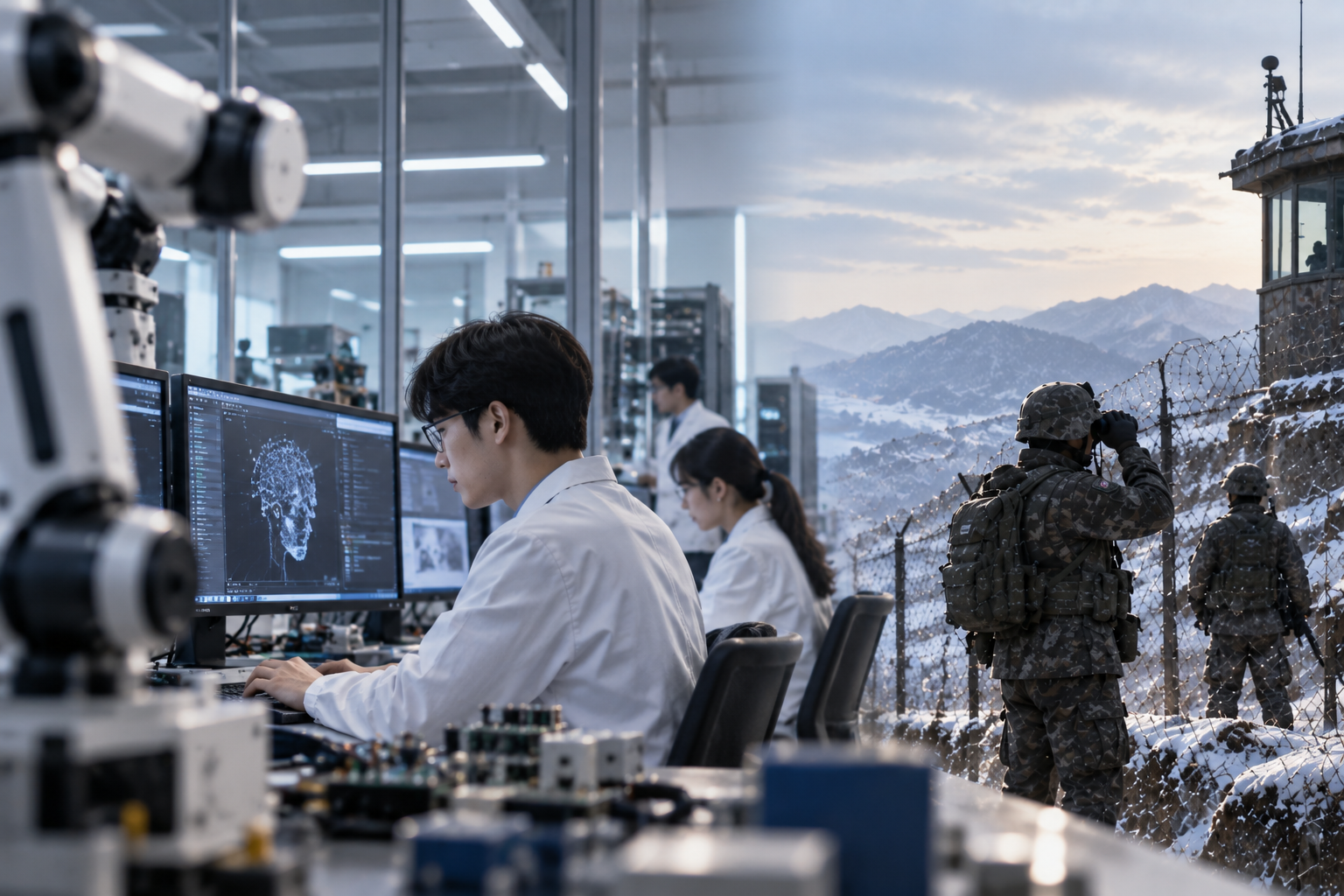
Historically, stronger demand translated into new factories, larger engineering teams and substantial hiring. Today’s expansion looks different. Advanced chip manufacturing has become increasingly automated, while artificial intelligence is allowing companies to optimize production, quality control and research more efficiently than before.
As a result, output is rising much faster than employment.
The technology, electrical and electronics sector—which includes South Korea’s semiconductor industry—recorded one of the country’s strongest financial performances over the past year. Revenue climbed sharply, while operating profit surged on the back of recovering memory prices and booming AI infrastructure investment.
Employment, however, barely moved.
The limited hiring reflects the changing economics of advanced semiconductor manufacturing.
Producing next-generation HBM chips requires massive capital investment in fabrication plants, extreme ultraviolet lithography equipment and advanced packaging facilities. Those investments increase production capacity without requiring proportional increases in headcount. Much of the additional value now comes from highly automated manufacturing systems rather than labor-intensive production.
The industry is also becoming more selective about recruitment.
Instead of broad-based hiring, semiconductor companies are focusing on specialized engineers in artificial intelligence, advanced packaging, process integration, chip design and manufacturing software. Demand for elite technical talent remains intense even as overall employment growth remains subdued.
That imbalance is contributing to broader concerns in South Korea’s labor market.
Young job seekers have long viewed the semiconductor industry as one of the country’s most attractive employers because of its high salaries and long-term stability. But as hiring slows despite record earnings, opportunities for new graduates are becoming increasingly concentrated among a relatively small number of highly specialized positions.
For policymakers, the disconnect presents a new economic challenge.
Semiconductors remain South Korea’s largest export industry and one of its primary engines of economic growth. Yet stronger corporate performance alone may no longer generate the employment gains traditionally associated with industrial expansion.
Instead, productivity is becoming the industry’s primary growth driver.
The shift mirrors a broader transformation taking place across the global technology sector. Companies are investing heavily in artificial intelligence, factory automation and digital manufacturing platforms to increase output without significantly expanding payrolls. Financial markets have rewarded that strategy, but its benefits are proving less visible in employment statistics.
South Korea’s semiconductor leaders remain well positioned to benefit from years of expected AI-driven demand.
The question is whether the industry’s success will continue to be measured primarily by export growth, profitability and technological leadership—or whether governments and investors will increasingly expect those gains to translate into broader job creation.
For now, the country’s chipmakers are producing more semiconductors than ever before.
They simply are not hiring at the same pace.