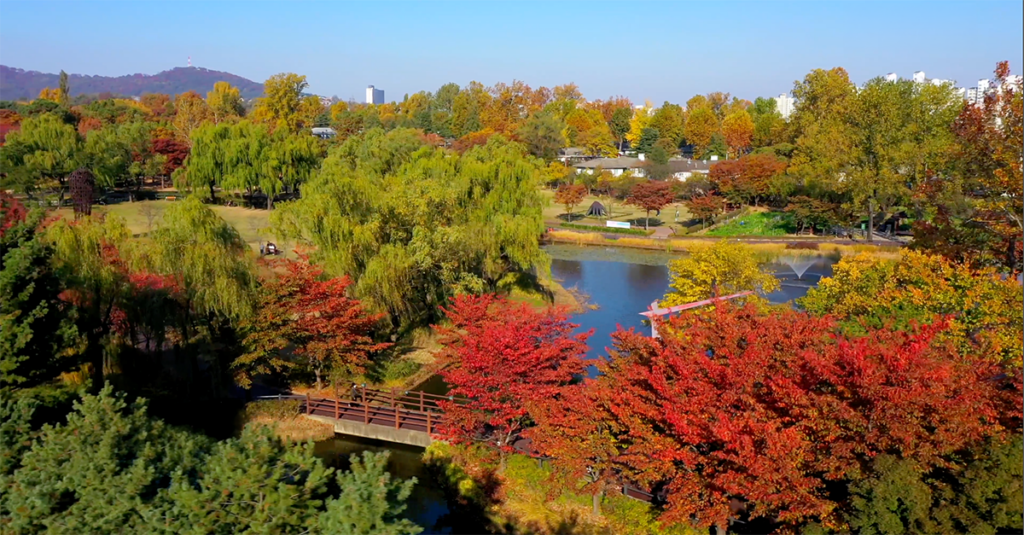
South Korea’s struggle to add more homes in Seoul is beginning to collide with another long standing ambition, turning a former U.S. military base in the center of the capital into a major public park.
The central government is searching for new sites to expand housing supply across the Seoul metropolitan area, and land around Yongsan Park has emerged as one possibility. The government says no decision has been made. But Seoul officials, the local Yongsan District government and nearby residents are already pushing back, arguing that land reserved for one of the capital’s most important future green spaces should not become another apartment site.
The dispute reflects a problem that makes housing policy particularly difficult in South Korea. Homes, especially apartments in Seoul, are more than places to live. They are closely tied to household wealth and to access to jobs, schools, transportation and other opportunities concentrated in the capital. That makes housing supply and prices politically sensitive, but it also creates a geographic problem. Adding homes somewhere else in the country does not necessarily relieve pressure in the parts of Seoul where demand is strongest.
Seoul has another constraint. Much of the city is already developed, leaving the government with few large parcels where substantial housing can be added quickly. Building entirely new residential districts inside the capital is difficult, while redevelopment and higher density construction in existing neighborhoods can require lengthy planning and approval processes. That has pushed policymakers to consider land that might otherwise have been used for different public purposes.
Yongsan stands out because of its size and location. The area sits in the middle of Seoul and includes land that was used for decades by the U.S. military before portions began returning to South Korean control. Rather than treating the former base simply as real estate, successive South Korean governments have planned to transform much of it into a national park.
That history is at the heart of Seoul Mayor Oh Se hoon’s opposition.
Oh said at a public discussion on real estate policy on Aug. 6 that preserving as much green space as possible was a responsibility of the Seoul government and that the Yongsan Park site should be handed to future generations in the condition in which it is returned.
Two days later, he reinforced the message on Facebook, describing Yongsan Park not as unused land but as a vital green space for Seoul and a national asset that should be preserved.
Oh pointed to decisions made under earlier administrations. Former President Roh Moo hyun treated the site as an asset for future generations and established a principle against above ground construction, while the government of former President Moon Jae in continued plans to create a green centered national park under legislation enacted in 2007.
Oh’s argument is that South Korea should not solve an immediate housing problem by consuming land that previous governments deliberately set aside for the city’s long term future.
Yongsan District, the local government covering the area, has taken a similar position. It said the park should not be viewed as ordinary land available for development because of its historical significance, symbolic role and public purpose.
The district has also pointed to the Special Act on the Creation of Yongsan Park. Under the current law, the main area of the former U.S. military base is in principle supposed to become a national park, with restrictions on converting or disposing of the land for unrelated uses.
That means any housing proposal could face more than political resistance.
Yongsan District Mayor Kim Kyung dae has said the district could use its permitting authority if necessary to oppose construction. At a residents’ gathering outside the Yongsan Children’s Garden on Aug. 8, Kim was reported as saying he would work with Seoul Mayor Oh and lawmaker Kwon Young se to stop the development even if that required physically blocking it.
Residents have turned to another distinctly South Korean form of protest. Hundreds of funeral wreaths have appeared along the road leading to the Yongsan Children’s Garden.
The wreaths are normally associated with mourning, but in South Korea they have increasingly been used in public protests as a highly visible expression of anger or opposition. Their presence at Yongsan signals how residents view the issue, not simply as another construction dispute but as a threat to a public space they believe should remain a park.
Yongsan District said it is inspecting the wreaths twice a day for safety and has no immediate plan to remove them.
There are also practical questions about whether housing could be built on the land at all.
Because the area was used as a U.S. military base, authorities would first have to examine the condition of the soil, the extent of contamination on individual parcels and what remediation would be required. Those environmental questions come on top of the legal restrictions already attached to the park.
Seo Jin hyung, a professor of real estate law at Kwangwoon University and president of the Korea Real Estate Management Association, said decisions on housing should come only after the condition of the soil is properly assessed.
He also argued that Yongsan’s position in central Seoul makes green space particularly valuable. Once such land is developed, he said, restoring it would be difficult.
The confrontation leaves South Korea with a choice that is becoming harder to avoid.
The government needs more housing in the Seoul region, where demand remains concentrated and large undeveloped sites are scarce. Seoul and Yongsan officials, however, argue that the scarcity of land is precisely why the former military base should be protected rather than developed.
Seo said the longer term answer may require Seoul to accommodate more people through higher density development while still reserving enough land for roads, parks and other public uses.
That is what makes the argument over Yongsan larger than one apartment proposal. South Korea is trying to determine how much of Seoul’s limited land should be used to address today’s housing pressure and how much should be preserved for the city that future generations will inherit.